Spring Exhibition learning portfolio post

I survived the spring exhibition! What is the spring exhibition? Like the winter exhibition, we presented a bunch of projects that we had worked on, although this time we weren’t in groups. The first project we worked on was the Blue sky project. This was a very interesting project, so I’ll go through by talking about each of the phases of the launch cycle in the order we did them in.
The first phase we did was the look, listen, and learn phase. We did brainstorming to find issues we really cared about and would want to fix. I am a hockey player, and I always end up falling on my butt, but the problem is there isn’t as much padding on the hockey pants as you would think, so I hurt my butt a lot and even sometimes bruise my tailbone, so I chose that as my problem. We then had to do research on how to fix the problem we chose, and summarize it. I summarized my idea, a cushioned pad to reduce the impact of falls, as a blueprint:
The next phase of the launch cycle was the ask phase. We had to make an action plan to schedule what we would do and when we’d do it so that we could stay more organized. Here’s mine:

The next phase was the understand phase. This is where we did most of our research, which we had to get from a primary and secondary source. My primary source of research was interview with local hockey players and one of my hockey coaches. I used the feedback from the interviews to improve my idea. My secondary source of research was the internet, which I used to find things like how big the pad should be and what materials I should use. 

The next phase was the navigate phase, where we grouped together all our ideas, and then selected our best ideas, which we would use to make prototypes in the next phase.

The create phase was the next phase, which is where we had to make prototypes based off of all the research and idea grouping we did. Here is what some of my prototypes looked like:
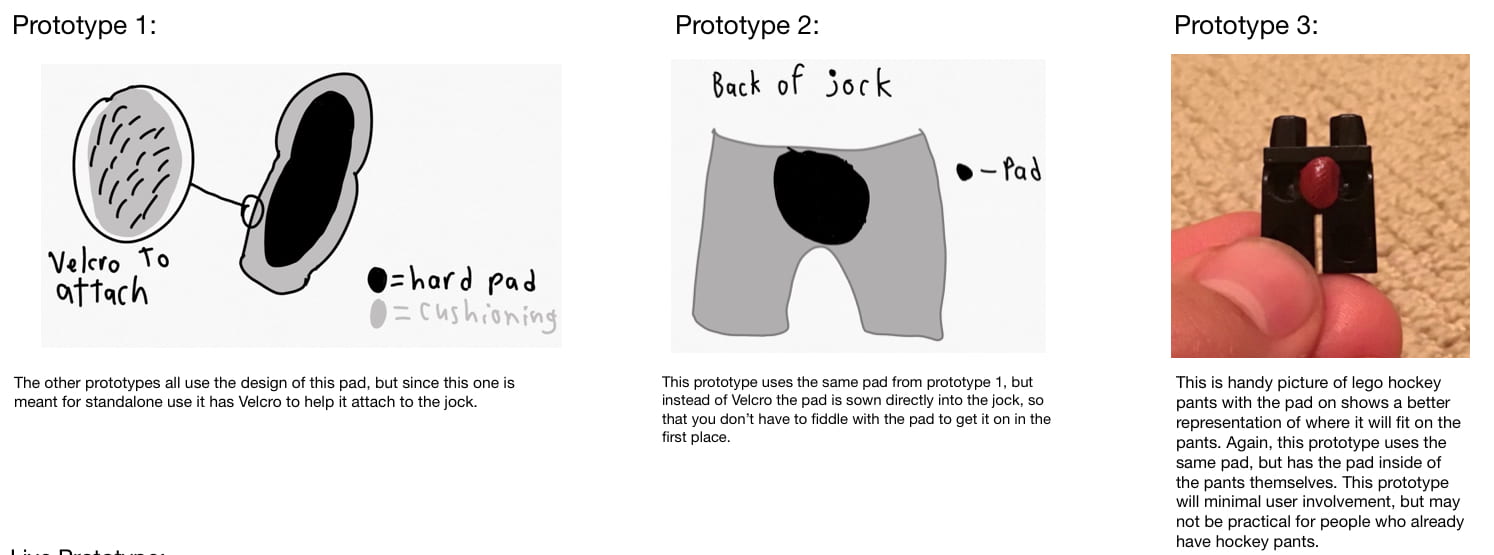
I got some people to test out my prototypes, and used their feedback for the next phase.
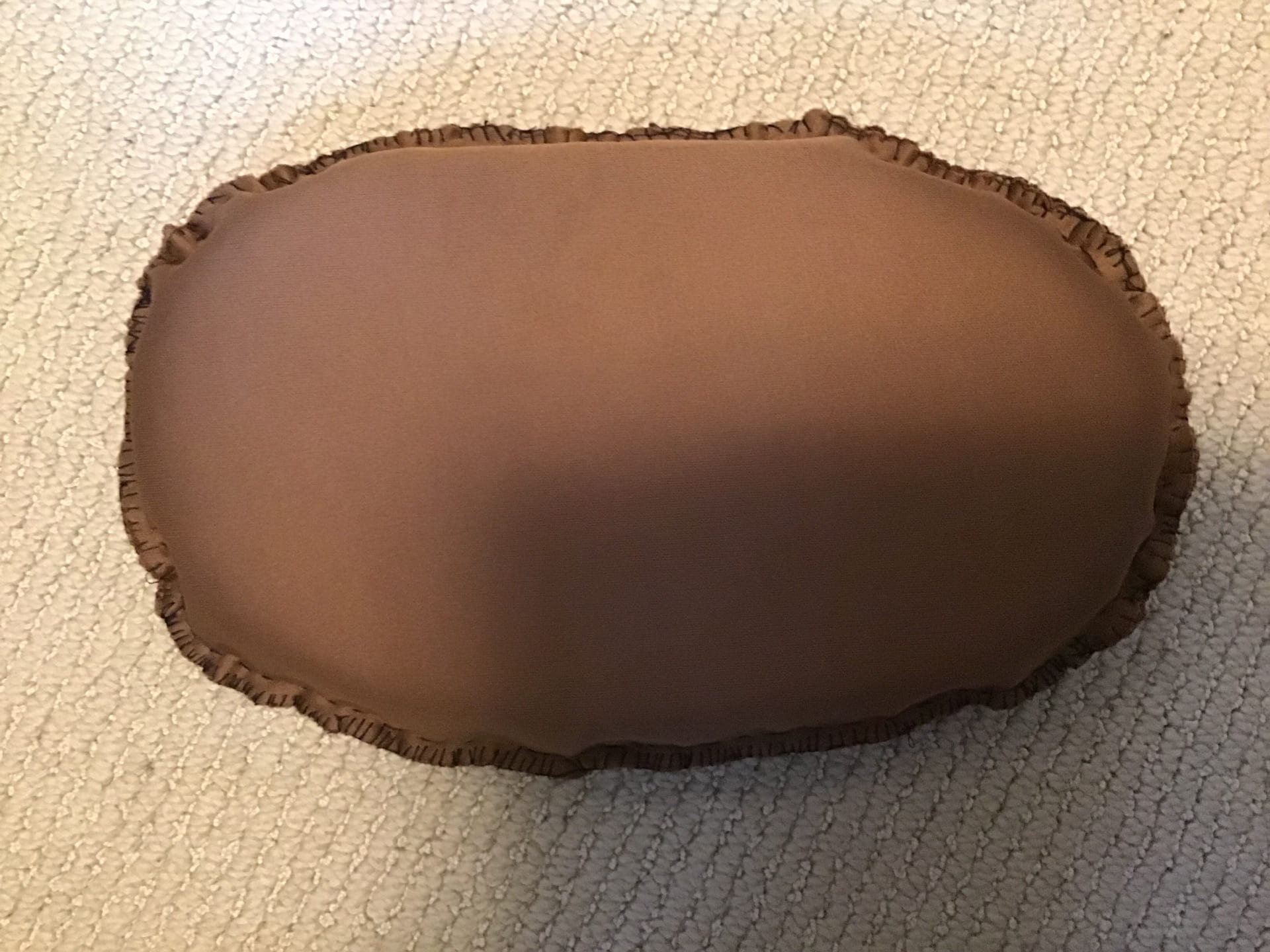
The next phase was the highlight phase, where I took the feedback I got and used it too improve the prototype. The original pad was this:
The feedback I got was along the lines of “the padding works, but it falls off too easy.”. I tried it myself and found this to be a problem, so I added some Velcro, and there was my final product:
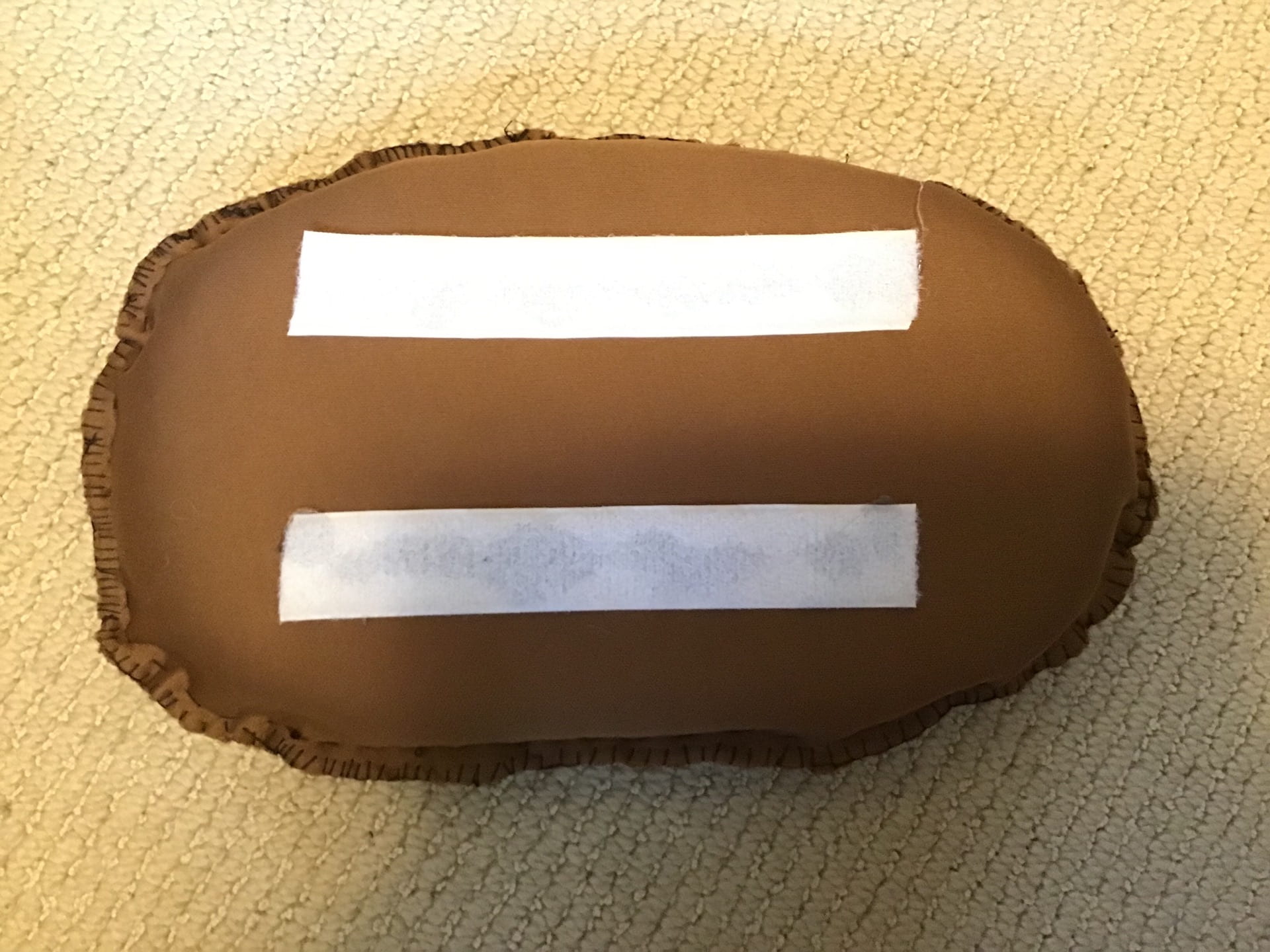
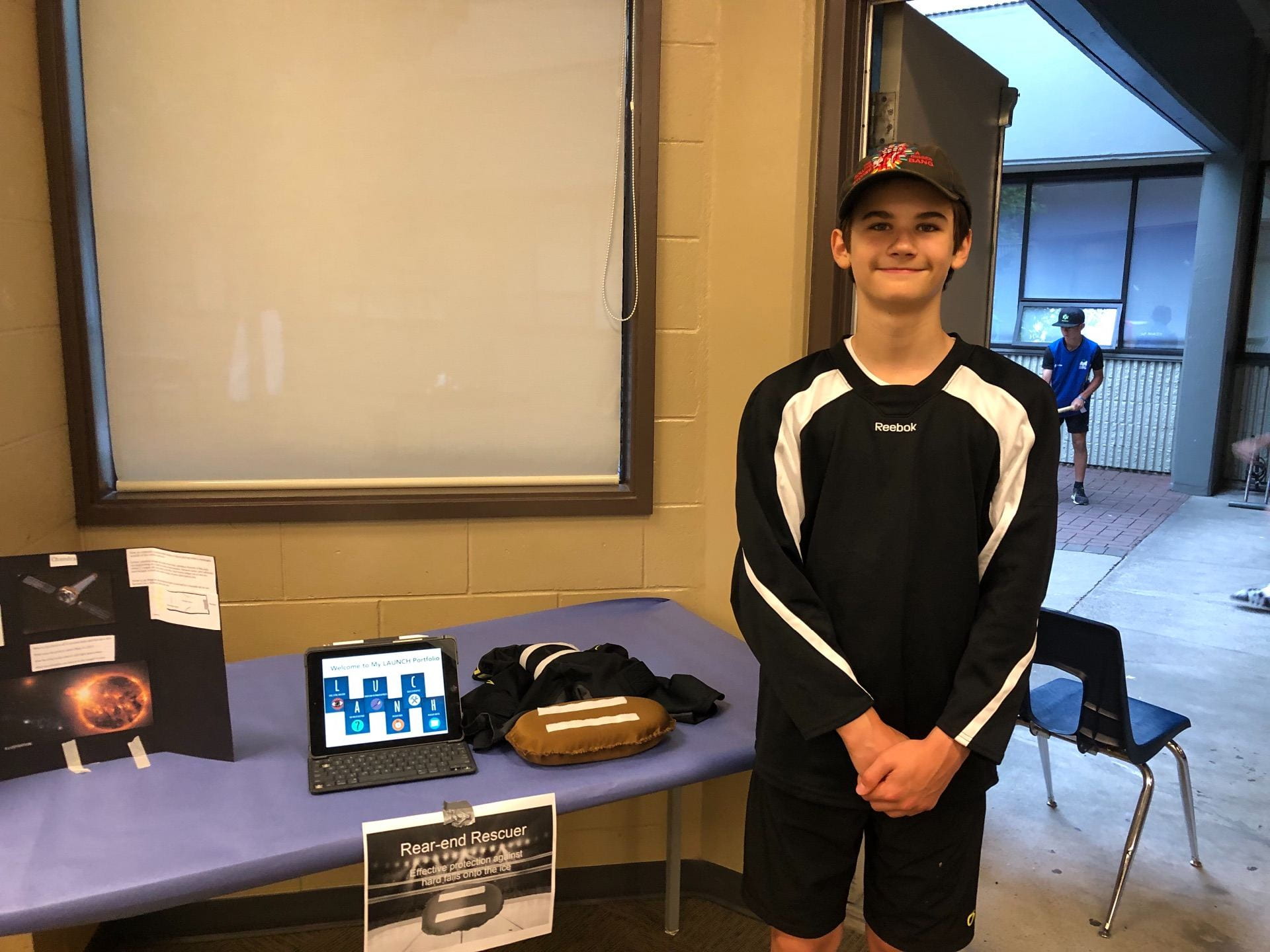
That was a brief summary of my blue sky project, what I presented during the exhibition is right here. What I actually put in my launch journal is here.

In reflection, the blue sky project was a great experience, because it was cool to actually create something to fix a problem you had instead of whining about it, and it will definitely be useful later on if you are going to be creating products of any kind. That was only one of my projects I had to present however, we also had a science project to do.

As you can see, the science project is about space probes. We had to choose a space probe, find out different facts about it and stuff like that. The main thing it was about, however, was different frequencies and wavelengths. There were questions we had to answer like what kind of wavelength the probe took pictures in, stuff like that. We also had to find a picture and get when it was taken, what it was, how far away the object in the picture was, and what wavelength it was taken in. In reflection, I guess it was good, because knowing about wavelengths and different kinds of light is important.

The third and final thing we had to do was present our time machine. I’ve already made a separate blog post on that, so go and check it out! Anyways, that’s my reflection on the spring exhibition, which as a whole was a very good and educating experience, happy summer vacation!

colonizing in a tempest reflection

Well, the the colonizing in a tempest project is over, so it’s reflection time!  For a brief overview of what happened, we had to answer the driving question “how can we use Shakespeare’s “The Tempest” and the history of New France to stage dramatic tableaus that help an audience understand the lasting effects of colonization?”. We did research on New France and how to stage tableaus, and the end result was a tableau based on the Tempest that talked about the history of New France. However, apart from the final result, there a few things we did that were really important in answering the driving question, which is what I am going to be talking about here.

The first one we did was an activity on how to be a good anthropologist, and to really assess the documents written by Europeans in New France to see if they were writing it in a sense that they were culturally superior or giving too much ground to the First Nations and excusing everything they did because they didn’t want to be biased on judging them. I feel this really helped us see both sides of what happened in new France, and be fair to the French, British, and First Nations alike in our presentation. This was very important to the driving question because if we didn’t learn about this, we would be probably have been biased in the timeline we did, which I talk about later, and we would probably be biased in choosing what things to include in the tableau. The activities we did is here, we basically had to assess if the author was biased or not.

The next thing we did that I thought was important to answering the driving question was when we had to summarize each of the acts of the tempest into something that we could actually perform as a tableau. Being able to identify the important parts and moods of the scene and summarizing them was vital to the completion of the final product and answering the driving question. If we didn’t do this we probably would have ended up doing things that weren’t as important as we thought, which wouldn’t leave room for more important events. This was an important thing to learn in general as well, because you will probably end up summarizing things for other projects, like we did for our blue sky keynote.

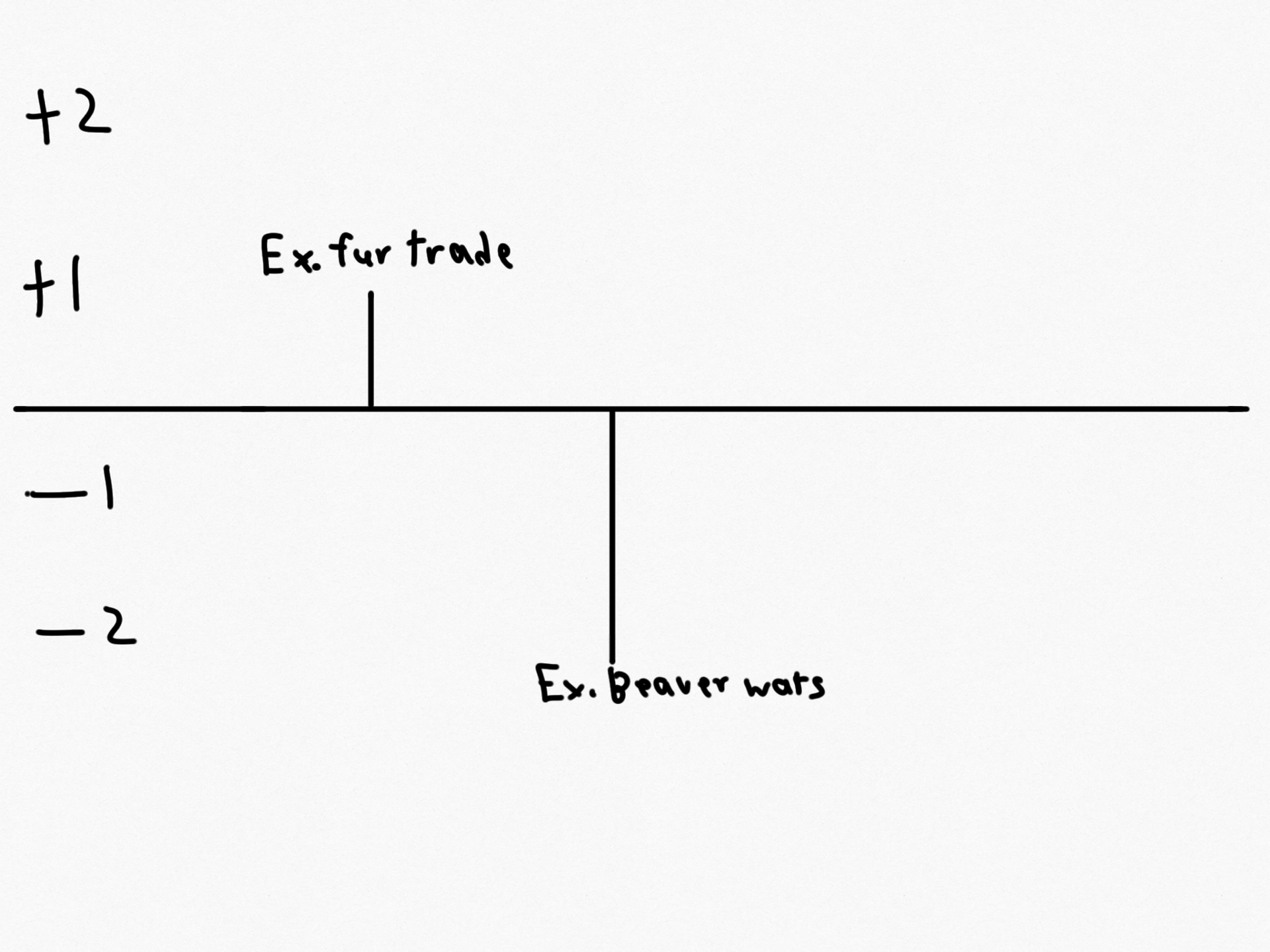
Example of what the timeline looked like.

The third thing that was pretty important was the timeline. The timeline was important because we had to put the most important events in New France, and then put if they were positive or negative and add up to see if the exploration in New France was positive or negative overall. It was very important to the driving question because it decided which events we put into the tableau, which was a vital to explaining the history of New France while being brief as possible. Summarizing was also very import skill here, as we couldn’t include too many things, and learning to summarize things is a very valuable skill. Anyways, that was my blog post on the colonizing in a tempest blog post, you can see the part of the tableau that I was in here.

Tpol

Throughout the year I have learned a lot of new things which have really helped me grow as a learner. I’m going to be giving an example of something that really shows my improvement for each subject, and why it is a good example to showcase what I improved this year.

Maker:

Example: DI

DI was something completely new to me, especially the challenge I got, because I had no idea of how a drone worked or how we were going to get it finished in time. But during the final week before DI, I really had to step out of my comfort zone and get things done, and then me and my group had to present our drone/blimp, which we didn’t even know would work. But it ended up working out, and we got third place, and that last week really helped me realize that stepping out of your comfort zone can be a huge help to you, because that way you can accomplish things you never thought you could do before. It also taught me about the importance of being organized and having a schedule, because I had so many things to get done while still juggling everyday tasks. One of the things that I think it helped the most with, however, was my teamwork skills. Our group had quite a few disagreements, and I think our group as a whole learned from the experience. The most prominent thing that helped my teamwork, however, was the instant challenge. In a situation where you have limited resource and time it’s easy to freak out and just blurt out your idea, but I learned to wait and carefully listen to everyone else’s ideas before you talk about your own, and to actually consider your teammates ideas and see if they may work better than your own.

Humanities:

Example: colonizing in a tempest play 

The colonizing in a tempest project where our whole class had to write and act out a play/tableau was huge which means I learned a lot of things from it. First off, some of the activities really helped me look at things from different perspectives and not be biased so that you can see things for what they really are, which is a pretty useful skill. It also helped with teamwork skills, as we had to coordinate what we were doing with our group and work something out that everyone agreed with and then coordinate that with the whole class, and then make revisions. This took a lot of time to do, but as a result the  tableau as a whole made more sense. There was definitely lots of things to be getting done, which helped push the importance of using Things and the Calendar, especially since we had other projects going on at the same time. It, like DI helped me step way out of my comfort zone. I’ve done acting before, but with a whole audience staring at you is way more scary, especially because you had to hold that pose and not move while everyone was watching you. I didn’t mess up or anything though, so it all worked out in the end.

Science:

Example: eyeball dissection

This is another one about stepping out of your comfort zone, but in a different way. Instead of presenting something, you’re literally dissecting an eyeball. Sure, I was grossed out at first, but it ended up being really cool to see the lens and eye jelly separated from each other. It pretty much showed me that you don’t have to step out of your comfort zone for huge projects and stuff, but just doing it in class everyday like doing an assignment in a different way can be a really rewarding.

Math:

Example: Math (I know, 10/10 example)

This year in math we didn’t really do any projects, so I’m just going to talk about math in general. I’ve been doing much better in terms of not getting distracted, but I still get distracted occasionally and have to do the math later. This has taught me that no one is going to chase me down and make me do it, and that if I want to do well I have to keep track of everything myself and stay organized. This doesn’t just apply to math of course, it applies to pretty much everything in life, and is a very useful thing to know.

PGP time machine artefact

For PGP we had to make an artefact to show something we learned in PGP that we wish we knew back in September. We had to choose from our productivity unit, where we learned how to use apps like things and the calendar, our goalsetting unit where we read a book and learned about how to set good goals, and our 7 habits unit, where we learned about a bunch of helpful things from the 7 habits book. I chose habit 3, because not only does it go over of a lot of things in the productivity that helped me out, and adds a few things as well.

For the artefact itself, I made a finger puppet show. It shows how I was really procrastinating before I found out about it, but all the different strategies it showed me like prioritizing and using a planner/calendar helped me be more productive, which is why I wished I knew about it back in September.