May 10

Russian Nationalism

In our most recent project we started learning more about nationalism. I chose to focus on Russian nationalism which first started before WWI. We learned about the key people in Russian Nationalism and what they did to impact their countries. 

Our final products for this project where videos that we would talk through showing what nationalism was and what our countries went through pre WWI because of nationalism. This video would be about 3-4 minutes long and would go over our questions that we made to help us learn about Nationalism. These videos also went on YouTube.

The country I chose to study was Russia. Russia was the biggest country inn Europe before WWI so everyone was kind of afraid of them. This actually made my job quite a bit easier because Russia didn’t instigate WWI. I learned a lot about Russias power system and how it was often very unstable and unbalanced, most of the time because of the Tsar’s. I think that learning about Russia really helped when it came down to Natiolism because it was a very nice canvas to help me learn. 

Overall I think that this project really helped me figure out myself what Nationalism is and how it Affected WWI. I learned a lot about how nationalism caused tensions and fuelled WWI. It’s interesting to see how strong national pride led to tension between countries and eventually  war. While nationalism can be motivating, it can also be dangerous if taken too far. This project has sparked my interest in studying nationalism and its impact on the world.  

April 8

Mpols…Round 2

Thank you for coming to my presentation of learning. I am the expert on my own learning. I am also responsible and accountable for my own learning. You can expect me to give an honest evaluation of my progress. We will discuss my strengths and opportunities for growth. Thank you in advance for listening and for offering feedback that I can use to improve as a learner.

Here we are again, our Presentations of Learning. Last time I did this presentation I was super nervous and thought I had to do perfect. This time around, I will do my best to be relaxed and more confident about what I say. So, without further ado, my Mpols, a reflection on my learning so far. 

This year so far had been very, very eventful. Some points that I will talk about in this post are: engagement in school, specific projects, Field studies, my concussion, and DI. Now, if you look at this list its kind of all over the place so I will do my best to connect and explain these points.

I think a good place to always start during these presentations is my learning goals I made at the beginning in of the year. These goals are something I will often be coming back to thorough this post but for now I will do a basic rundown.


It might be hard to read the text boxes on the page. but all of them basically sum up to say I will be a perfect student who excels at almost everything in and out of the classroom. As you might guess, this is crazy unrealistic. I don’t know why I didn’t learn from last year, but that just isn’t really something I should be aiming for. I should be aiming to get better and maybe even go above and beyond in some parts of my learning that I need to improve on, making me a more well rounded learner. I have since adjusted my learning plan to make them realistic, and  will be revising these throughout the rest of the year.


The first big thing this year that we did as a class was a Field School. We went to Alberta on this study in early September, which I really liked exploring with my friends. I always love Field Schools, so you could probably guess how excited I was to see how early we were going. 

This trip really started the year out with a bang and got us as a class excited for the rest of the year. We went to places I would never have otherwise been, such the exclusive part of Lake Louise, the view point on the Lake Louise hike, the Big Beehive and discovering the endangered snails.  To give you a bit of perspective, it was like giving a bunch of already excited kids Redbull just before a soccer game. This would make us crazy with excitement, which is kind of what this trip did. But it was definitely an amazing trip.


School engagement:

I would love to say that I am 100% invested and dedicated to school and school work, but that would be a lie. To be honest, I don’t know how dedicated I am with school. I like to be in class with my classmates and I like all of my teachers, but everything else about school just doesn’t interest me all that much. There are so many other things around me that get me distracted from school and academics in general. This is something I have been struggling with most of the year and am dong my best to help myself and problem solve. I find that as a result my work is certainly not at my potential. I learn best when my body is moving but even then I find myself getting distracted. I know being engaged in school is important especially as I move up in grades and I really want to try to find a way to put more effort into school, and hopefully get more out school as a result. And I don’t think it is a PLP thing, I am struggling to be engaged in mainstream classes as well. 

This is an image of my original thoughts and goals in relation to my engagement. This has since been revised. 

Favourite project:

Link to this project

One project I really liked was metaphor machines. These machines were products of our imagination and thought process which we developed over a span of a month and a half. I really like learning about the history of the Qing Dynasty and how it is reflected in modern day China. The machines we built took over a month, and they were extremely tedious to build because every detail had to mean something. For example, one of the parts of our machine was 14 marbles falling down a ramp and this represented the 14 provinces of the China and how they all collapsed into a rebellion against the dynasty. I think I am most proud of the teamwork that happened and the actual machine itself. During this project I got know some people that I’ve never really talked to before and that was a lot of fun. I personally am most proud of making sure the machine ran as I was the Building Director. I was proud to share our work with everyone during the Winter Exhibition.

Concussion:

In November, I got a concussion from a field hockey ball hitting my temple. This really set me back academically and physically as this took away one of the things in my life that helps me regulate myself, which is sports. It set me back quite a bit in school as I couldn’t focus at all in class, and was having trouble understanding almost all of the work, and it was taking almost all of my energy just to be there and socialize. As this was my first ever concussion, I didn’t realize how long it would take to recover. I kind of thought it would just go away within a month. I worked very closely with my physiotherapist, and they helped me through my concussion by giving me exercises and treatments that would help. As I needed to wait a while for physio clearance to play sports again, I didn’t really have balance between school and sports as it was only school and no sports. This really affected me because being active and playing sports is such a big part of my life.

DI:

link to this project

In PLP we participate in a tournament called Destination Imagination where schools from all over the lower mainland compete to win in different categories. This is my first time doing it since we didn’t do it last year, but my brothers did it in previous years and I’ve always watched them. My group this year had one of my good friends, two other grade nines and two grade tens. We don’t normally work with different grades so I thought this was going to be fun and  the grade 10s had done DI before so we were hoping that they would help us through the basic steps and help us strategize so that we could have the best possible tournament. Our group was tasked with making a machine that could launch a beanbag a certain amount of distance, as well as a play, that creatively described how the launcher fit into the everyday world. Well, we all had big parts in DI. Ultimately only four of us ended up performing. Our first performance went quite well. We stuck to the script and came first over all the groups in our category. For our next tournament, the provincial tournament, we improved big parts of our script and a little bit of our machine. We had learned how to work together well during the first tournament so we knew that we could do way better this time round. We ended up coming first overall of the entire province in our category! Although, for both the performances, the grade tens did not perform, I still feel very proud of our hard work and dedication. I’m actually looking forward to doing it again next year!

Conclusion 

Overall this year I think that I grew as a person and a learner. All of my mistakes I made this year, which were a lot, I definitely learned from. One of the things I did different this year compared to last year was asking for help. There were a couple times this year that I think I should be very proud of, those moments were when I asked for help when I needed it. Whether it was from friends, parents, or teachers it almost always cleared something up or helped in some other way. This to me was the biggest change I think I made this year. 

Overall looking back on my first semester in grade nine PLP, I think that I have met my goals, while also improving in all the places where I had hoped to. I have created pieces of work that I can be proud of, while also learning how to be a part of my class. Looking forward to the rest of the year, I hope to be able to continue developing my skills as a PLP learner, as well as provide work in every project that shows a complete and sophisticated understanding of the topic.

March 15

The undead Frankan Stuffies!!!

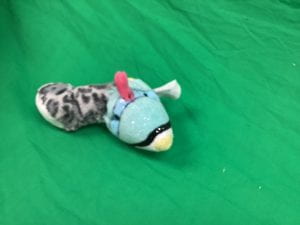
What is it?! Is it a fish. Is it a unicorn? No its a Frankan Stuffy! 

In our most recent project we did something a bit different than usual. We were tasked with taking apart a few stuffies and piecing them into a whole new stuffy. After we had our new stuffies, we made movies that explained how those stuffies came to be. This project tought me a lot of new skills that I’m glad I have now.

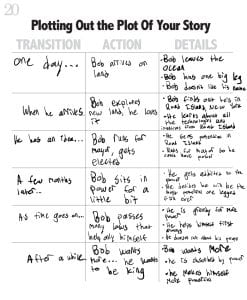
Before we even got to making our Frankan stuffies however, we learned about stories. We learned how all stories have a particular algorithm that they go through. This is called the hero’s journey. Once we learned a bit more about it, we learned about how we could incorporate the Hero’s Journey in our own stories. This would help give our characters  structure and depth, and would ultimately make a better story.

Before we got to filming however, we had to do a few things first in preparation. Some of these things were story boards, Log Lines, and even writing a short story. All of this was super helpful in the long run because it showed us exalt what to do when it came to actually filming.

My main character in this project was a Parrot Fish with a snow Leopard leg, and a Unicorn horn. Weird right? As you could imagine, I could do whatever I wanted to with this story. I decided to make our friend Bob the Fish a power addicted leader, meaning that he couldn’t help himself, whenever there was power he needed it. This turned out to be a harder topic than it sounds like to write about and even harder to are a movie about, but I made it work.

The driving question for this project was: How do we as writers make our message clear and engaging to an audience. I think that it is easy to write about something, challenging to write something and make it engaging, and even harder to do both of those while trying to get your audience to feel a certain way. This proved to be true this project, but as I said earlier I made it work, mostly by putting myself in a viewers perspective. This is my main strategy whenever I have to communicate my writing in another format. Another thing that helps me is making my product very simple, because simple is easy to understand. However with this method we often lose lots of detail, so it is not my favourite thing to do.


link to my Frankan Stuffy Video.

In conclusion, the Frankan Stuffy project allowed us to explore the Hero’s Journey in storytelling and challenged us to communicate our message clearly and engagingly to an audience. Through creating our own Frankan stuffies and films, we were able to learn valuable skills that will help us in future projects. Despite the challenges we faced, we were able to overcome them by putting ourselves in the audience’s perspective and simplifying our content without losing important details. Overall, this project was a fun and educational experience that pushed us to think creatively and outside the box.

March 11

DI Regionals- A Truly Unique Experience

Would you believe me if I said I came first in a Regional school competition, that we had to improvise half of? Well you better, because we did. This is the story of my Destination Imagination regional tournament that we did as a part of PLP. 

This project took place over a few months, during which we worked in and out of school to create a machine that fit certain dimensions, did certain actions, and went along with a certain story. This story was the backbone to how we were graded during the actual performance during DI, so it was important that the story was realistic, and original. As a group we realized this early on in the process of preparing for DI (Building machine, building backdrops, making costumes, making  the story etc.),meaning we were more prepared than the other groups in our challenge were. However, we had one disadvantage that showed itself a week before our Di Regional.

Our disadvantage was how us Gr9s had 0 experience in this tournament, and the Gr10s in our group, one week out of competition, decided not to come. This was a big problem. They had a bunch of our supplies from the presentation. This left us with 4 team members instead of 6. This was bad news for us because this left us totally inexperienced, and nervous with only about half of our supplies. Despite all of these setbacks, we made it work. With what we had we put together a 7 minute presentation that really represent our group and our ideas, and that we believed exceeded the expectations of our teachers, peers, and even the DI judges.

After our main DI presentation we had to wait until the second part of DI was ready for us, our instant challenge. Leading up to the instant challenge we had no clue what it was going to be. It could have been anything from building a tower out of our shoes, to making a full play. During the time between our presentation and our instant challenge we went around and watched other people’s performances to scout out our competition. We also discussed among our team the game plan for the instant challenge and how we could prepare for it. I’m not allowed to talk about the instant challenge, but I can say that it required all of us to work as one team to produce a solution.


Despite the setbacks and challenges we faced leading up to the regional tournament, our hard work and determination paid off. We were able to come together as a team, think on our feet, and push through the obstacles to deliver a successful performance in both the main DI presentation and the instant challenge. The experience taught us valuable lessons in teamwork, resilience, and creativity. In the end, we were proud of what we accomplished. Heading into the regional tournament, we were nervous but excited to showcase our skills and compete against other schools. We are excited to be recognized for our hard work and dedication with a first-place finish in the regional competition.


Overall, our experience in the Destination Imagination regional tournament was challenging but rewarding. We look forward to taking what we learned from this experience and applying it to future challenges, especially to provincials on April 6.

January 25

Louis Riel’s Search for Equality

Today we will be exploring Louis Riel’s story, unraveling the life of a rebel leader and the struggle for Identity. During his life he created a massive impact to the Métis in so many ways, by creating opportunities that the Métis would not have, as well as giving each and every single one of them power in there own lives.

In our most recent project we learned about Louis Riel who has been a very controversial but impactful figure in Canadian history. He was a Métis man who realized how little his people had in perspective to European settlers and Europeans in general. He decided to start speaking out and express his opinions and concerns to the public and the government, he urged for Métis people to speak out and support them getting the rights that they deserved. He was supported by many but also hated by many, often because of the brave and unheard of actions he took to get what he wanted, or needed. I personally think that this is an amazing and courages thing to do for something that you are passionate for. 

However, all of these brave actions couldn’t eventually escape him from being captured in 1885. He was hung for high treason, and while many celebrated, many where unhappy. The Métis communities learned from Louis Riel that they had to fight for what they needed. I think that what Louis Riel did was honorable and overall a positive thing for Métis rights.

Louis Riel was no hero

Our driving question for this project was, How has the Portrayal of Louis Riel Changed Over Time? I think that the portrayal of Louis Riel has changed over time because of how we now view Métis and indigenous people as equals as we always should have, becasue of a changing society and changing societal norms. Throughout history we never saw them as equal to the European settlers because of racism and discrimination, however we now realize that that was wrong and should never be repeated ever again. My point is that I think our society has grown to see Louis Riel as an activist and leader in the charge for something that every human should have but didn’t back then. 

-the revisions from my first draft of my essay
Overall I think that this project taught me a lot of history about Métis peoples and there rights, or lack of, and how things around them have changed over time. I really liked this project and would definitely do it again.

January 16

Let Thy Have… Winter Exhibition?

Welcome back to my second winter exhibition. This year I knew what to expect and how to prepare for the challenges that come with exhibitions to make it easier on me and my group.

This year our topic was Revolutions. We learned a little bit about every revolution and then were aloud to choose one that we would be studying for the rest of the project. I chose to study the Xinhai Revolution, because that is one that I thought was very interesting and I knew it would keep me interested and engaged for the rest of the project. 

We learned about our revolutions for a few weeks so that we knew 100% of it. Our final product for this project was a Rube Goldberg machine, with the connections from the different parts of the machine representing different, significant  parts the revolution. Knowing this, we all understood that we had to know this revolution incredibly well so that the connections would be accurate and understandable. Throughout the process of learning about revolution we were put into our groups of everybody studying the Xinhai Revolution to discuss what we had learned, and compare our notes. I think that this was a very crucial to our understanding because seven minds work better than just one. 

Over the next few weeks after the research process we got together as our Xinhai group every day to start making the connections for our machine. This was helpful because it gave us time to get used to working together with each other before the actual building process. It was important to us as a group to be on the same page at all times, because when even one of us is not on the same page as the rest if the group, or not on task it could set us back quite a bit. While planning we were assigned roles which would help guide us when we were lost and keep us busy. I was given the role of Engineering/Physics expert. This meant that I had the job of making sure everything would work, and deciding what to add and or take away to make the machine run better.

When it actually came to building the machine, there were a few challenges. One of the challenges was being precise. This was a problem because we had to transfer exactly what was on our blueprint into real life with the materials we were given. One of the solutions for this we found, was trial and error. We would test one part of the machine over and over until we got the exact angle or exact length and then we would attach it to the board. This worked really well for us because it was efficient and easy to understand, so that everybody in our group could help. Another problem we had was finding enough jobs for all of us to do. This was a problem because the jobs we were assigned often didn’t transfer into the actual building, but instead helped with the earlier steps focussed on preparation. I think that I was good at finding work and when I didn’t have any work I would ask our project manager. A few times though, not everybody in our group did this and I would often find myself with a sidekick that wouldn’t do as much as they could, and instead just followed us around not being productive. This was probably our biggest challenge as a group, however we almost always helped each other and reminded them what there task was, and how to be productive with our time.


On the day of the actual exhibition we were all very excited and nervous, partly because I think we poured so much hard work into these machines, partly because we didn’t know if they would work. At this point we were down two team members due to time conflicts, but it was ok since we had adapted our script to fit just the five of us. As people watched us, we explained our machine, why each connection was important to the revolution, then showed them the machine in action. It almost always went well, and the few times it didn’t we swiftly got it working agin and tried again. When I look back on the night I think that we did a really great job working together and staying positive, while also sticking to the plan. 

Video of Machine


Our Driving question for this project was, How do Ideas Drive Change? I think that ideas spark change by questioning the status quo and inspiring new possibilities. When embraced and put into action, new ideas have the potential to shape movements and drive progress. In short, ideas serve as the driving force behind new transformative change for the better of our race.


Overall, I think that this exhibition wen much better than intimidate. I really enjoyed working with the people in my group, and would happily do it all over again. I think that the biggest things I learned this project where, teamwork, and patience. Without everybody in my team doing these two essential things, I think that this project would have not been as successful as it was.

December 8

Loon lake… Retreat!

Last week almost all of my class here at Seycove went to Loon Lake, a educational retreat about an hour away from the school. To get there we had to drive along a very scary logging road that took us through a dark forest, not gonna lie I thought we were being kidnapped. 

On this retreat we were promised a few things, good food, unique experiences, and an opportunity to bond and get to know each other better as a class. Throughout this post I will talk about how these promises were kept, and our experiences here at Loon Lake overall. Our driving question was, How do the choices we make set our future path?

At Loon Lake time was split up very precisely, divided between outdoors activities, eating, and lesions with Jono (About him) in the Canabode. The Canabode was a classroom like place were we would do the calm, focussed learning. This was hard for a lot of us because we would just come from running in the forest or being 50 feet in the air, to sitting or standing for up to 2.5 hours. Outside we would do new activities everyday, I think my favourite was probably the rock climbing wall, and the adventure race. Both of these activities made us get our hands dirty, and work together with people we might not normally work with.

At Loon Lake we learned many important lessons about our decisions, and how they impact people around us in positive and negative ways. One of the biggest ways they impact us is our future. We can change peoples life experiences in the present and the future just by some split second decision we make. We learned how to work toward only positive decisions. 

I think that the answer to the driving question in my opinion would be that the decisions we make impact people around us and the people around us impact us, so the most important lesson is make decisions that positively impact the closest people to us because they will set the path for our future.

November 8

Take Your kid to Work Day

In this post I will be talking about my Take Your Kid To Work Day experience. Our assignment for Take Your Kid To Work Day was to make a one to two minute film showing what we learned at the place we went to. I went to my Mums school, Stratford Hall. I have been coming here a couple times a year when I have to go with my mum since I was young so I know a lot of the people that work there, as well as the community. I will give you all my rundown of today, what I leaned, and what i took away form this experience. 

I tried to focus my film on the community of Stratford Hall and how it has impacted and supported the staff and students. I learned that it is hard work outside the classroom as teachers, and that the support of the community within is often needed. 

I really enjoyed going to school with my mum and would definitely do it again. I learned so much about schools internally and would love to figure out more.

Here is a link to my Youtube video. https://youtu.be/U7qC3AYuIa8?feature=shared

October 30

When There is Horror… There is Critique?

During the process of creating the Remake of “Run”, there were a few steps. First we had to work as a group to make a story board, this story board would guide us to make the clips the same as a in the original. This was something we worked towards, because it was a remake, meaning it is has all the same clips and sounds. Once we finished our first draft, we watched them as a class and gave each other revisions. Our critique was kind, helpful, and specific. We decided that our movie needed revision in the facial expression, and sound effects part, because those two categories were not accurate to the original. We all got a chance to refill the entire movie after reading and reflecting upon our peer critiques. This was a good move it turned out because the monster had to be smaller. We also decided to change where we filmed, because in the first draft we filmed the entire thing on a hill, which is not accurate to the original film, and also meant we were running up a hill, making us slower. Our new film location was better because it was flat and more open like the path that the runner is running in in the original. Since we knew what to film and what to change in the film the process took probably half the time, meaning we had more time to edit. I think we did a lot better on the second try, because we knew what to do and what went well and what went well.

Link to my groups first draft: https://youtube.com/@Evelyn.Seycove?si=6IXs2alWdQbZJARo


October 16

In The Beginning… There Was Humanities!

Would you believe me if I said that my class and I traveled over 800 km for a project? Well, it’s true, I hope you believed me! Here’s what happened.

During this blog post I will be writing about our first Humanities project of the year, Rocket Mountain High. During this project we investigated the West by going there! That’s right, we went to Alberta to learn more about the West and how it impacts us. Our final product for this project was our Multi-Touch book, which told the story of our learning in Alberta. 

If you want to see the Maker side of this project you can check out my blog post at: https://www.blog44.ca/jonahl/2023/10/13/in-the-beginning/

During this project we each created a thesis that we would have to find evidence for throughout the whole project. My thesis was; Alberta, and Western Canada offer breathtaking natural beauty, with stunning mountains, lakes, and prairies, making them top destinations for outdoor enthusiasts, and people who just enjoy nature. I chose mine to be about nature, because that is something I am genuinely interested in, and was going to investigate during this trip regardless of us making thesis or not. I quickly figured out just how broad this subject really was, and that it would be tough not to find evidence for, although it would prove tough to summarize my findings. 

I think that throughout this project my main goal was to find evidence for my thesis and I did this by talking and often interviewing people, tourists and locals alike, about nature in the West, and how it impacts them positively and sometimes negatively. I really liked talking to the public, this was a skill that I developed throughout this project. At the end I also reflected on my own impressions of the places we visited because I spend a lot of time outdoors and wanted to see if I also had the same reaction as others.

Our final piece of evidence, our Multi-Touch book, was a collection of everything we learned on the Humanities side of this project. We made this book through an app called Book Creator, this app let us publish our books to the public once we were done! Our books had 25 pages in it in total, including a contents page, 16 pages about the places we went to, and an about the author page. This book made us really dig deep and show our learning in our own unique ways. We were given a template, but we could edit it if we wanted to. I feel like through pictures, and words I really showed my learning in this book. I hope you enjoy reading it!

Some of the most important things we learned as a class and individually during this project were: 

1. How to interact with the public, most of the time to get interviews, in a way that is respectful, but also lets them know what you want. 

2. Why the Five Themes of Geography are important and how they impact us in our daily lives. 3. How to effectively process and use knowledge that we gain during our project to help us with our assignments, and further knowledge of the subject. 

These were all important to our progress during this trip, because they helped keep us learning, and also on track.

Overall, I did enjoy the Humanities side of this project, a lot of what we learned in Humanities can help me in my academic, as well as daily life. I think that this project brought us as a class closer together because of all the memories we made in Alberta, good and bad, we all learned new things about each other. I really enjoyed this project and the opportunities that came with it! Thanks for reading my Humanities blog post!