Welcome to Gilead! Let’s Set Some Intentions

Hello all readers, and welcome back to my blog! It’s only been a few days since my last post, but that one was wrapping up a project, which can only mean one thing: it’s time for a new one! I am kicking off this project by setting some intentions for my learning, so let’s get into it.

First off, let’s talk about what exactly this project is. We are doing a project on dystopia by the name of “Welcome to Gilead!” The name is a reference to the popular dystopian novel The Handmaid’s Tale. I am super excited for this project as it feeds directly from authoritarianism! As for the actual content, let’s look at a very brief outline:

We will begin by launching the project by watching a movie: V for Vendetta. We will use this to both gain a stronger understanding of what dystopia is, as well as refresh our ability to analyze texts.

Then, we will begin our first benchmark: connecting fiction to the real world. As we read our novel (which is explained more in the second benchmark), we will be making connections to current events to put into perspective why this story matters in 2025.

For our second benchmark, we will be reading and analyzing a popular dystopian novel. When we launched, we got given a few options, and I chose Never Let Me Go by Kazuo Ishiguro. I am very excited to read this book.

For our third benchmark, we will be writing a short dystopian story. This is the one I am most nervous about, as I haven’t done much creative writing recently. I hope that once I have done more learning on dystopian stories, I will be able to rise to the challenge and write something that I am proud of.

To present our learning, our stories will be linked to QR codes which will be put up in the hallways at school, so that people can read them.

For this project, I am intending to strengthen my creativity by decluttering and minimizing distractions in my workspaces so that I can focus on what I am making. I will use self regulation to regulate my thinking and make sure I don’t stray too off-topic while still being able to create new connections and ideas. I will also use collaboration by creating multiple drafts and asking for feedback from my peers.

I hope that I will be able to stay true to these intentions. I am ready to learn more.

Thanks so much for reading!! I am so excited to get into this project.

On Ambition📚

Hello all, and welcome back to my blog. I am officially in my last year of high school! It’s a strange feeling knowing that this is my last September, that the little me in 6th grade, who acted out because she found things too easy, now struggles to showcase her learning.

This blog post is going to take us through my most recent humanities project, but I am going to start elsewhere. You might be confused at first, I promise that it’s all connected. Let’s get into it!

I have always been told that I’m smart, but that I need to apply my learning better. Throughout the last few years, this has been a prominent issue in my learning. I find that I am always trying to do more, and in that attempt, I lose the ability to do any of those things in depth. I was under the impression that the day that I chose to do less would be the day that I would gain that depth back.

Unfortunately, that wasn’t the case. This year, I cut back on the amount of hours I was spending on gymnastics and my job. Instead of training 16 hours a week, I’m now doing 12. Instead of working 8 hours a week, I’m working 4. So, technically, I should have 8 more hours to do homework, process my life, and maybe even have social interactions with people.

This year, I began with the intention to fully reach towards extending my learning, in a way that I never have before. Based on the feedback that I’ve spent my whole life receiving, I feel as though this is completely and totally in my reach, and just what I need in order to continue challenging myself throughout the remainder of my high school experience.

Over the course of this past project, I have learned that this simple recipe for extending my learning (decluttering my brain; giving myself space and time to make original connections to my learning) won’t necessarily give me what I want. It’s an especially frustrating feeling when I reflect on how the entire reason I decided to start in PLP, all the way back in grade 8, was because I wanted to extend my learning – not necessarily in my grades, though I assumed (hoped) that they would come with it, but in the knowledge I would gain. All I ever wanted was to learn more about the world around me. However, even if the grades I was rewarded with weren’t necessarily where I was shooting, I am extremely proud of the work I’ve done in this project. Even if it was not extending based on the proficiency scale given to us for school, on my own personal scale for my own learning, I feel as though I was moving further past where I have ever gone before.

The project I am talking about was called “Don’t Be Dic-tator,” in which we took a deep dive into the signs of rising authoritarianism and a very current risk of dictatorship. We used Timothy Snyder’s book, On Tyranny, as a main resource (which I urge you to look at – it was a brilliant read), and also looked at a few case studies on historically significant examples of authoritarian dictators. By the time we had completed that, we had built sufficient knowledge to begin working on our end product: a 25-minute documentary explaining the warning signs and potential ways to fight back against authoritarianism. All 17 of us PLP 12’s worked collaboratively on this documentary, splitting it into 4 different segments that we decided were significant to touch on. Once it is released, you can find our documentary linked here.

My proudest moment within this project was probably the first benchmark, which was a literature note and two permanent notes to add to my Zettelkasten talking about my main takeaways from On Tyranny. Now, as I mentioned earlier, I was absolutely enthralled by this book. It brought up so many different perspectives that I had barely even considered before. For example, in the prologue, Snyder mentions how when America gained independence, they were trying especially hard to avoid a single individual or group seizing power for their own benefit. He goes on to explain that because this is such a prominent idea in the USA (because this idea of freedom and equality is placed upon a pedestal as if it’s a trophy and not just the bare minimum), a major topic of political debate is tyranny found within smaller niches of society (scaled down into smaller communities or groups). An example he gives is women and how they often get treated in domestic abuse situations – how the abuser has all power over her and her body, how they might be the tyrant of the nation that is a woman. When I first read this passage, I was amazed by this idea. As I continued to read the book, I continued to be fed these thoughts that I had never even considered before. Again, Snyder’s work absolutely fascinated me, and I would highly recommend looking into his work for yourself.

Once I had finished reading the book and taking all my notes on it (and wow, I had a lot of notes. There were so many things to take away!), I added an extra little reflection on many of the little connections I had made to my life while reading this book. This never-ending train of thought is probably one of the pieces of work that I am most proud of from all of my time in high school so far – not because it might be what is important or useful for this project, but because it came so easily. I had so many things to say that were so interesting to me – so many thoughts that came in an endless stream straight out of my brain.

I began this reflection with a takeaway that I feel is an important way to look at our lives right now: “Not everyone has the freedoms to choose many things, but we all as people get to choose how we react to things in our lives, and those choices in turn change the course of others’ lives. Together, these choices make up the mosaic that will one day be our history.

I went on to talk about the thing the has caught my attention the most throughout this project: at the end of the day, all of these historically horrific authoritarian dictators were humans, too. They were born, as we were, and lived, as we do. At some point in their lives, something went wrong and they ended up where they did, instead of where we are. Somewhere within a collection of moments, something bad happened and they chose the wrong way to react. As I learned about these dictators (Hitler, Mussolini, Saddam Hussein, Pol Pot, etc.) I could see myself in them, which may seem strange, but I’ll explain.

When I was younger, I would tell everyone “I’m going to be the first female prime minister of Canada!” I wanted to do it better, to fix every facet of society, to be written in history. (I wanted, I wanted, I wanted.) This was not fully born from ego, although there was a bit of that in the mix too (a small part of me that wanted to prove that I could be good at things, just like the other kids, if I actually tried for once. What I didn’t realize was that trying looks different on every child, and for the most part, I was trying – it just looked different from the kids who sat up straight and raised their hands to speak and followed the exact checklist for what the teachers wanted). The main source of my want was simply out of anger – at its core, for me, it was directed towards the education system. But I thought bigger picture – so I redirected it to the government, broadening my anger to many different areas of society. I wanted nothing more than proof that there could be a better version; that there must be an easy fix; that there could be a perfect world. As I grew older, I realized that it simply wasn’t that easy. By the time I got to 7th grade, my vision had narrowed once again, into anger at the education system. “I’m going to be the first female prime minister of Canada” had turned into “I’m going to become the superintendent”. Eventually, I realized that, too, was ridiculous: there is no “easy fix”, otherwise it would have already been done.

You can see the similarities in this train of thought to those of an authoritarian dictator (of course, we don’t know exactly what any of them were thinking, for we are not them, but we can begin to infer based on the actions they chose to take.) I liked to believe that when all of them seized power, it was out of a drive to make a nation better, and they just went about it the wrong way. But at the end of the day, in my childish train of thought (the one that had me believing that I would be able to run a nation if I just tried for once) it wasn’t solely about me being the one to swoop in and fix things (although the idea of proving everyone who hadn’t believed in me wrong was quite appealing). It was about someone, anyone, fixing the issues deeply rooted within our society today.

Through much more reflecting, and one long conversation with Ms. Madsen, I reached a seemingly hollow conclusion to the question that had been nagging me for the entire project: “what exactly draws the line between a child like me and an authoritarian dictator?” The answer was simply narcissism. Once I reached this conclusion, I felt a little (maybe more than a little) frustrated. I felt cheated, as though this question deserved a larger answer than what I had found for it. But as I thought about it more and more, asking myself more questions by extension, I realized that this one-word answer held more than it gave credit for.

Going back to the comparison between myself and many historical dictators, as I grew older, I had the privilege of being taught that there is not, in fact, anything within me that makes me special, that makes me better than everyone else. Some people do not have that privilege, and as they grow older, they just get pushed up onto higher and higher pedestals, without one single thing damaging their egos (and we all know this is much more common among men: hence the fact that every dictator that we looked at was a man). By extension, some people are just born with more narcissistic tendencies than others: potentially leading them to think that they would be able to manage an entire nation and serve it well, all on their own.

This opens up the age-old question: nature vs nurture: Are power-hungry, dictatorial tendencies taught? Or are some people simply born like that? Was I born like that, and simply taught out of it? How much can we change with how we raise a person? Are there traits that simply cannot be taught out of a person, no matter what is done? And this reminds me of a thought I once had, long ago, just after I had realized that maybe being the superintendent of our school district was not, in fact, my calling: if I had a different name, would I have a different personality?

These are many questions, all directly related to one another (though the one about my name might be further off, but still relevant). However, one is, in my opinion, the most relevant, as it gives us the most evidence towards figuring out why these dictators chose to react to a crumbling nation in the way they did, instead of continuing to grow older and wiser and helping in the smaller ways that a citizen might be able to (because at the end of the day, it’s the population who holds the most power – another major takeaway from On Tyranny, but one that I am simply less focused on). Was I born with dictatorial tendencies, and just taught out of it? We can attempt to find the answer if we circle back to nature vs nurture in personality development, and through a bit of research, I found that we won’t be able to find a concrete answer, because there is none – every situation is different, and a person and every inch of their being is built on a foundation of a complex weaving and intertwining of nature and nurture; of the way they were born and the experiences they have touched in between that and death. Studies show that people are predisposed to have different personality traits genetically. However, people change as they grow up and grow old. Personally, the conclusion I have reached through this is that we are all born with deeply rooted traits (for me, that probably contained the need to prove myself, as it probably did for most of the dictators filling our history. Although, even that was probably fed by the way that I felt as I developed: as though people didn’t believe I could do many good things), and as time passes, as life moves, many of these traits ebb and flow; new ones develop; old ones get lost. But the ones rooted deeply within us (for me, the need to prove people wrong about me) are hard to budge: not impossible (I no longer think that I could fix the world on my own, or at all, in fact, because really there is no perfect fix), but definitely difficult to uproot.

Through this, I have realized that this version of myself as a child was not necessarily a pathway to tyranny, though it certainly could lead there. Somewhere within, there was a crossroads, and the true and complete definition shows us the exact different between tyranny and ambition. And through all this thought, I have come to the realization that the true distinction between these two very similar traits is narcissism and humility.

So, to restate the question: what exactly draws the line between a child such as myself, and an authoritarian dictator? The answer lies in the narcissism deeply rooted within one’s tendencies, and whether it can be untaught. A child (in most cases) can be taught not to operate with such a high ego. They can learn that there is more to life than just themself and others’ opinions on them. An authoritarian dictator is a person who was never untaught these ideals. Someone who believes that they can fix it all. Even when the intentions are positive, this narcissism leads them astray, and in the end, many people get hurt.

When writing this post, I only intended to showcase the process that brought me to that conclusion. However, reading back on it, I am realizing that I took a major step in finding the solution to my one other main question: together, can we create a world where no one ends up on the pathway to becoming a dictator?

The answer, at its core, is no. There is no perfect world, where no one holds those tendencies. However, we can begin to constantly work towards it, for however close we can get is better than not trying. To achieve this, we must all work together, especially parents and teachers. We must snip it at its root – unteach narcissism, and teach children to be humble and strong (the two do not have to contradict, in fact they often work hand-in-hand). Together, we can work towards a better world.

My notes on the book (and personal reflection, at the bottom) can be found here.

This project took me through a journey of finding the answer to this question: a rather fantastical journey, if you ask me, for I have never looked so deeply within myself for a history class before. It fills me with joy to know that I truly am learning things in school (about myself, about the world) – which is something that I yearned so completely for when I was in the 7th grade.

Thank you for journeying through it with me. It’s been a wild ride, and I am so excited for the next project. See you soon!

Reflections on Grade 11🌊

POL Declaration: Thank you for coming to my presentation of learning. I am the expert on my own learning. I am also responsible and accountable for my own learning. You can expect me to give an honest evaluation of my progress. We will discuss my strengths and opportunities for growth. Thank you in advance for listening and for offering feedback that I can use to improve as a learner.

Hello everyone, and welcome to my transitional presentation of learning. Today I will be reflecting on my learning over the 2024-2025 school year. 

If you remember from my mPOL, I began by reflecting on my VMV statements, which I made in October. I’m going to begin this tPOL the same way, so we can look at how far I’ve come since then.

Let’s start with my vision. I said,

When I graduate, I want to be an open-minded, thoughtful, and helpful learner. I strive towards being a positive light in any team I work in and be able to work with a growth mindset on any project in my life.

While I have spent all year pushing for this, I have come to a bit of a realization that though this is a great goal to have, it is so insanely unhelpful when I try to force myself to be positive when I just need to push through and get things done. Sometimes, I will have to do things that I don’t enjoy, and forcing myself to pretend that I do enjoy it won’t do anything except waste my energy and leave me burnt out. That being said, I still think it’s important to try my best to not only start off every project with a positive mindset, but keep it up throughout. I think I have been pretty good at this over the course of the year – though I’m not perfect, I feel as though I stay pretty positive throughout my learning process.

This has been a year of much mental growth but very little habitual change. I have gotten very good at reflecting on what I do and who I am, but I have been very bad about handing in work – mostly because I struggle to actually get the work done. I often find myself starting things and getting stuck, unsure how to word my thoughts and write them down. I have never struggled with that in my life – I have always been able to just spew my thoughts out in a straight line, having them already formed into cohesive paragraphs.

Even as I write this, I am finding myself writing out many sentences on their own, leaving myself to put them together in a proper structure later. You will only see the finished product, but right now I have many thoughts that are not yet fully formed.

I have been trying to figure out a solution for this problem, as it has been an issue for me in many recent projects. For example, on our trip to Haida Gwaii, every night when we sat down to write our scrapbooks I found myself staring at the screen while my peers were feverishly working, knowing what I wanted to say without knowing how to say it.

I think that I need to find a way to organize my thoughts – and I have an idea for a solution. We all know that I’m good at talking. An idea that I have been toying with, and has been working so far, is to use voice memos to keep track of my thoughts. Often, when I’m doing things like writing, I get distracted mid sentence, hop onto a different train of thought, and then completely forget what I was originally thinking. I have recently been using voice memos to talk through it instead of keeping it all in my head. Overall, in the future, I’d like to actually utilize the tools I have to help myself stay on top of my work.

Let’s move on to something that I have concluded, in my recent reflections, to be one of the biggest things that has been holding me back.

I never considered myself to be someone who struggled to ask for help. I only ever thought that people felt like that because they were embarrassed to need help. I have recently been thinking a lot about how I see myself, and the expectations I carry for myself. I have been reflecting on the fact that I hold myself to a much higher standard than what is humanly possible: I want to have the highest grades, the most insightful projects, be the best gymnastics coach, do the best at gymnastics competitions, be the strongest leader, sing the best in choir. It’s important to want these things, but at some point or another, I have turned these into my own expectations for myself. That is totally unfair to me, and it’s become a habit. A major part of this is asking for help when I need it. Another unjust expectation I hold myself to is that I can do everything I need to do without asking for help. I have found that this leaves me unable to do so because I do not want to let myself down. 

While for many people, the struggle comes from the fear of letting others (peers, teammates, teachers, parents) down, mine stems from the fear of letting myself down. I find that going into tests for other classes, gymnastics competitions, choir concerts, and even sometimes walking into class, leaves me paralyzed in my seat, and my mind running a mile a minute. For some, they may be thinking about how they don’t want to mess up, get a bad grade, or say the wrong thing. While those are also there for me, my main issue comes from getting distracted. Because I am constantly filling up my schedule until I am doing something every minute of the day, I spend my class time trying to sort through and process everything that is rushing by in my life. It feels like everything is speeding by and my brain is trying to catch up all the time.

As I write this, I can imagine you are thinking: well, maybe you shouldn’t do so much, Susan. If you can’t handle it, why add more? I find myself wondering that all the time. I have come to the realization that with these expectations for myself comes the need to excel in all of my fields. That includes school, gymnastics, choir, and coaching, which are all high commitment endeavours. If I tried to drop any one of them, I would be so incredibly disappointed in myself.

As I mentioned earlier, I struggle asking for help. My goal for next year, and to improve upon for the summer, is to begin turning to support when I need it. Whether it be my parents, coaches, teachers, or sometimes friends, I’d like to have the ability to ask for and get help without feeling like a failure when I need it.

In order to do this, I need to be ready to step outside my comfort zone. While sometimes I can do that, other times I am not very good at it. Next year, my goal is to keep pushing myself to do things I am less comfortable with, such as asking for help.

I was going to wrap this up with a few wins from this year, but I am realizing now I am running short on time to do so. Because of this, we will celebrate my one project this year with the most major win: The Write Stuff! The Write Stuff was a Humanities project we did back in March, and I am so proud of the work I did for that project. We got to write any piece we wanted to, so I reflected on a pivotal moment in my life with a journal-style writing piece. If you can recall from my mPOL, I talked a lot about how I work well when I have the freedom to do what I want with a project. This one spoke to me as soon as we began because I am someone who loves to write. Especially when I can write about what I want, it flows so easily and allows me to reflect and learn, processing what I’m writing at the same time as I put it out. This project was an absolute win because I completed all the work on-time, and feel as though I produced a great final product.

Other than that, I don’t have much more to say. Thank you for tuning in to my tPOL! Peace out Grade 11.


How Have I Grown, And How Will I Continue to Grow?🌲

POL Declaration: Thank you for coming to my presentation of learning. I am the expert on my own learning. I am also responsible and accountable for my own learning. You can expect me to give an honest evaluation of my progress. We will discuss my strengths and opportunities for growth. Thank you in advance for listening and for offering feedback that I can use to improve as a learner.

Hello all, and welcome to my midyear presentation of learning! Today I will be sharing the reflections I have had over the last few months about my learning. In order to show you this, I should go over my VMV statements from all the way back in October. Here is my VMV chart:

First of all, let’s unpack what I said and how far I have gotten in achieving these. We can begin with my vision statement. In it, I talk a lot about striving to be open-minded and positive. While I’ve gotten better with those two things, I am of course not perfect. But in our project in BCFP, ReconciliACTION, I think I demonstrated this positive mindset the most. This project was the one we presented at the exhibition, and I think throughout the project, not only did I maintain a positive mindset but I also stayed on top of my work. I am extremely proud of keeping that behaviour throughout the project, as it is something I have been reaching for since grade 8. Here is a photo of my setup from the winter exhibition, presenting my group’s work:

I think one of the main reasons that I was so successful in this project was that I was so interested in it. I was quite invested in learning about different language revitalization efforts in BC, and it helped me stay hooked and continue to immerse myself in my work.

On the other hand, this behaviour was a major stretch for me in our project for Humanities, “The Manhattan Project^2.” Throughout the project, I barely stayed on top of my work, and did not fully finish my video. I think the main reason this happened was because I didn’t enjoy what we had to make for the final product. I’ve found that I like projects more when they are open-ended, and I get to choose what direction to lean for my final product. However, I am aware that it doesn’t always work like that and I have to be flexible.

After reflecting on that, I started to think about the values segment of the chart, and how well my learning since then has represented those values.

Preparation

The 3 statements that I used for preparation were:

  • I will come to class prepared and ready to learn and participate
  • I will arrive on time and ready to learn at the bell
  • I will manage my time effectively to meet deadlines and complete tasks

Let’s unpack:

So far, I have been good for coming to class ready to learn and participate. When I walk into the classroom, I am ready to engage with whatever material we are learning. However, I do not always arrive on time and ready to learn at the bell. While it may seem like I have gotten worse at managing my time and getting ready for school in the morning, it is actually because I often get distracted or carried away with conversations or whatever I had been learning in my previous class. While I think that this is a step forward because I am engaging in other classes instead of being completely and totally disorganized, I still need to work on focusing on coming straight to class to be there right at the bell. As for deadlines, it has also been about 50/50. Some projects, I am super on top of my work. However, some projects have been total train wrecks. I think a main decider behind whether I will be able to stay on top of my work or fall behind is how interested I am in the project. I also struggle with keeping up with my work once I have already fallen behind a little bit. Even if it’s one little thing, it totally snowballs and gets worse.

As for my other two values, engagement and self regulation, I think I’m on a good path towards where I want to be. I find that I am often engaged with what we are learning when I’m in class, aside from when I’m tired. For self regulation, I am improving on managing my distractions and finding balance between my personal and school life.

Through all this, there is one central question: How might I edit or revise my VMV to better align with my daily habits?

I think a great way to revise my VMV would be to add solutions to those spots that seem like they still have issues and aren’t quite on track with where I want them to go.

For my vision statement, I could add that I could find that positivity and open-mindedness by adding more personal flair to my work when doing projects that aren’t as open-ended.

For my preparedness, I could add that I will focus on getting to class on time instead of getting distracted by things I am interested in in my previous class. 

Overall, I’m proud of my work so far this year and excited to keep trying to improve on my behaviours for success.

Susan’s tPOL 2024🌿

Hello all, and welcome back to my blog. Today I will be presenting my tPOL for grade 10! This has been a crazy year, and I’m so ready to reflect on it. Over this year, I’ve faced many challenges and kept going despite them. Today I’ll tell you all about my success behaviours that I’ve utilized this year to complete quality work, and even which ones I am more lacking in and stretching to try and get better at to make myself an even better learner.

Declaration: Thank you for coming to my presentation of learning. I am the expert on my own learning. I am also responsible and accountable for my own learning. You can expect me to give an honest evaluation of my progress. We will discuss my strengths and opportunities for growth. Thank you in advance for listening and for offering feedback that I can use to improve as a learner.

The first success behaviour I’m going to talk about is ownership and responsibility. This one is a bit tricky, as it is not really my strong suit. To have ownership and responsibility means to take responsibility for my work, which involves things like getting it done on time. That’s not something I’m very good at. Sometimes, though, I’m really good at taking ownership for my work and just doubling down and getting it done.

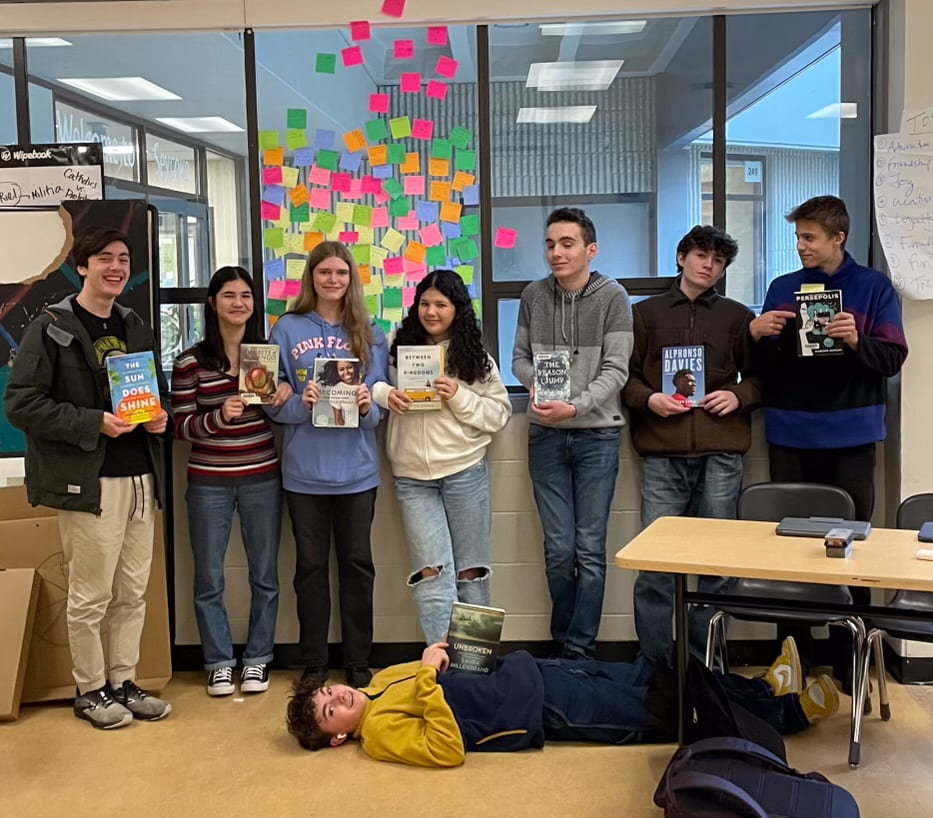
A great example of this was my work in the project “who am I going to be?” Personally, I absolutely loved this project. I think it jogged some great reflection for me on who I am and who I want to be as a person. For my blog post on this project, I took responsibility for my own learning and I got it done on time, with quality that I was very happy with. In that blog post, I shared who I want to be as a person with my audience, making deep reflections on the work that I had done for the project. I feel as though this project defined who I CAN be when I put my mind to it. In this project, we also read a book. We all got to choose different books and I chose a book called “Between Two Kingdoms.” When reading this book, I immersed myself in my learning and allowed myself to demonstrate the enthusiasm I had for my learning. I took ownership for my learning and got things done: finished that book, and wrote that blog post.

Unfortunately, there are many more projects where I FAILED at this behaviour. Now usually, FAILing means First Attempt In Learning. Devastatingly, this wasn’t just my first: it was my second, third, fourth, and so on. An example of how I managed to pull this off is my work in our most recent project in humanities: Chasing the Canadian Dream. In this project, I have done the opposite. I did not get things done. While I have worked hard in all my classtime to finish my book with quality, I did not finish in time for the Monday morning due date. Instead of taking agency for my learning and finishing it up at home, I let it pile up and didn’t finish it.

I think a goal of mine that I will work on over the summer and for next year is that I want to take agency for my work and be able to get things done with quality, like I did in “Who am I going to be?”

The next success behaviour I am talking about is contribution. This behaviour is a part of the engagement category. I think that I am often very engaged in class: when we are talking and learning, I am constantly reflecting on what we are learning about and contributing my ideas to the class.

A great example of this was our Romeo and Juliet project in humanities. In this project, every time that we would do readers theatre in class, I volunteered myself to read for the class. When we did class discussions, I would contribute my ideas.

Another great example of this behaviour is my most recent work in PGP on the project Back to the Future. I think that I contributed to my class’s success in the spring exhibition.

During this project, I was passionate about what I was talking about, and it reflected in my work and my contribution to our area. I was able to contribute my thoughts and ideas and present them to my audience without interfering or getting in the way of my peers. I think that this is a great skill of mine, because I’m really good at sharing my ideas without overstepping and taking from someone else’s. This is a good behaviour to commonly demonstrate in PLP, because it’s always people trying to speak their mind, and it’s easy to take it too far and take away from your peers.

The final behaviour that I’m talking about today is citizenship, which is under the category of conduct, ethics, and integrity. In our success behaviours, citizenship is defined and expressed by demonstrating leadership by setting a positive example, and encouraging and supporting classmates in their academic and personal pursuits.

After reflecting on this for a bit, I think that I stand somewhere in between on this behaviour. I consider myself to be a pretty supportive classmate and friends to my peers, but I’m not so sure about the leadership part. This is a hard pill to swallow, for a few reasons. For starters, this may seem surprising, but I have always considered myself to be a bit of a leader. As I’ve started to get older, I stopped filling that role of a leader because I started to get more self conscious about what other people think. Another reason this seems odd to me is because in many other aspects of my life, I do fill leadership positions: for example, my gymnastics and coaching, but at school, I’ve stopped doing that. 

I think this is something that I want to stretch for in my following years in PLP: I’d like to try even harder to set a positive example. This is something I especially want to work on because it not only benefits me but it can benefit my peers, too. I think that that’s really good because I love helping other people.

Thanks for coming to my tPOL! See you next year!

Let’s Get Crazy!

Hey guys, welcome back to my blog! Today I will be telling you all about our most recent project in PLP, “Cray Cray, Yay Yay.” The driving question for this project was “Why does it take a “crazy” person to change the world?” Over the course of this project, I researched and gathered lots of evidence to help me attempt to answer the question. Let’s dive in!

One of the first things we did in this project was a mini PechaKucha. For mine, I chose to present and talk about Frank Sinatra and how he changed the world. A PechaKucha is a presentation that contains 20 slides, where you talk about your topic for 20 seconds per slides. For this mini PechaKucha, the goal was to get us accustomed to presenting in this format and reflect on why it takes someone “crazy” to change the world. That’s why this PechaKucha was only 10 slides, not 20.

For my PechaKucha on Frank Sinatra, I think I did a good job. I am especially proud of myself for this one because this assignment was done during the week that I was away in Quebec to cheer my sister in in the International PeeWee Tournament. Normally, when I am away, I end up falling behind and being behind in my work afterwards. This time, though, I made sure to keep up and follow along from Quebec. As soon as I got back from Quebec, I presented my PechaKucha to the class. I’m glad that I managed to buckle down and stay on top of my work, and I think that this shows my growth as a learner.

If you want to see some more from that first mini PechaKucha, I have logged my learning process here. 

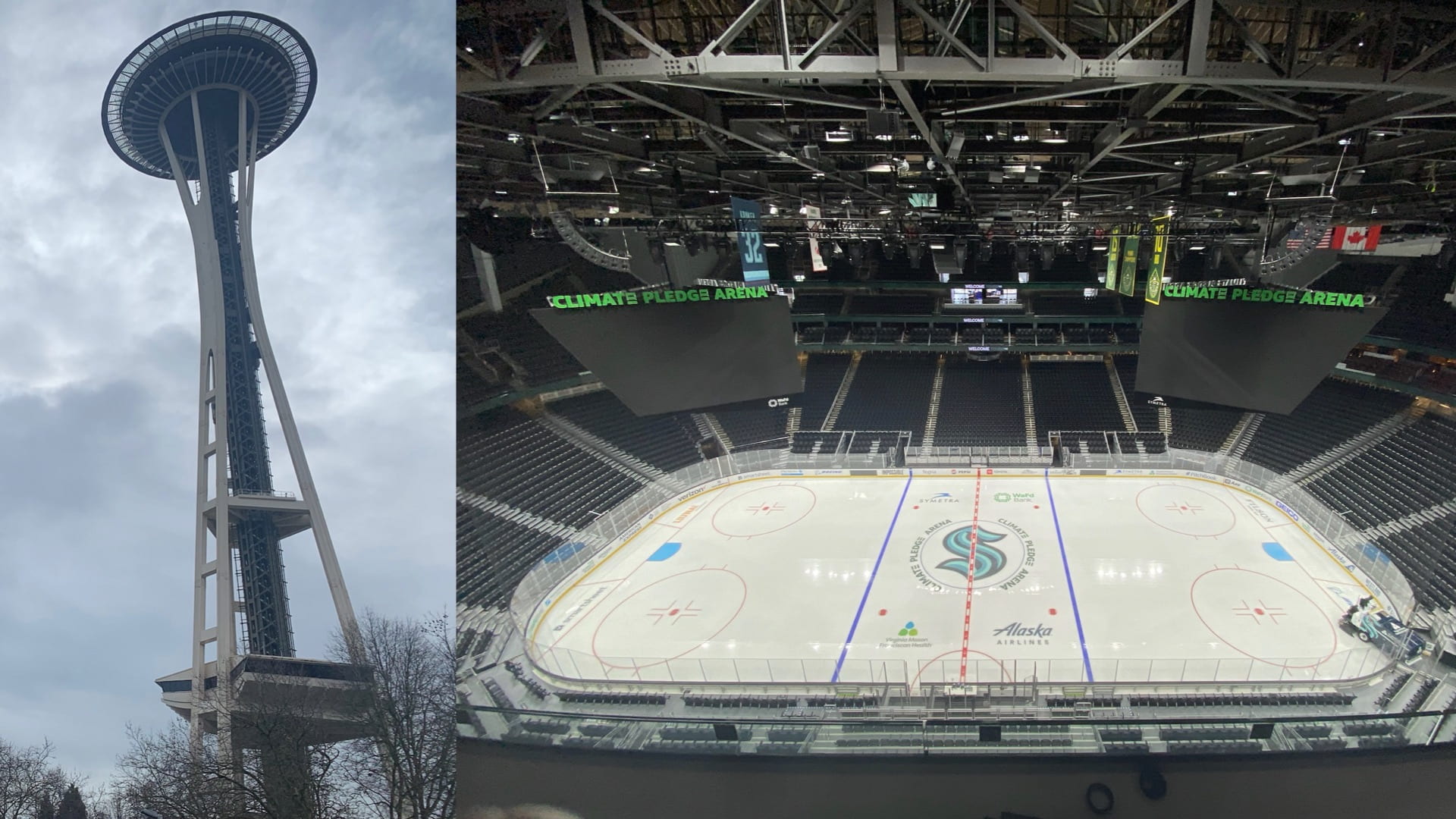
After our mini PechaKucha, we got put into groups for our final PechaKucha. Since the final product of this project is that big PechaKucha, done in a group of 4. But before we could get to the PechaKucha, we had to pick a theme and research. I was put into a group with Alex, Sofia, and Kadin. We picked the theme “Sustainability Solutions.” This theme revolves around sustainability and how it takes a “crazy” person to help us solve the problem that is our wounded planet. Before we could do anything else, though, it was Seattle time! The class went on a field school to Seattle for a week to gather evidence to help us answer the driving question. Unfortunately, I couldn’t make it to Seattle for various reasons. Luckily, the rest of my group did go.

While the rest of my group was in Seattle, me and a few of the other people who stayed back, including my friends Kira and Brooke, worked on research and essays about “crazy” people who are local to Vancouver. The local “crazy” person that I picked was Bryan Adams. Over the course of the week, I researched about him and found what he has done to help change the world. If you want to see my learning process and final essay from this assignment, click here. Overall, I am proud of this work because I am happy with how my essay turned out. Here is a photo of me with a couple of my friends who didn’t go to Seattle, writing our essays.

Once everyone came back from Seattle, we began to collaboratively work with our groups to begin to aim towards that final PechaKucha. We started by generating some Need to Know questions and then researching and using the information that was gathered in Seattle in order to answer those questions.

Once we had that done, it was time to create a story spine. For this, each member of our group did an individual story spine, and then we worked collaboratively on one big story spine. Here is our story spine:

Once we had our story spine approved, it was time to work on the beginnings of a script for our final PechaKucha. Each member of our group took a few pieces of the story spine to expand on. If you want to see some of that expansion, go here. 

After we had this expanded story spine, it was time to create it as a script with sections for each separate slide. Each slide we estimated was about 40-50 words since they are 20 seconds. Once we had these sections, we assigned some slides to each presenter. After that, it was time to pick photos to put for the slides, and finally, time to practice to present!

Unfortunately, due to a conflict with my gymnastics, I was unable to make it to the PechaKucha night to present with my peers. Thankfully, Alex and Sofia were able to pull through and present it well! I’m very glad I got put with a great group who was flexible enough to be able to present even without 2 members of the group. Here are the final slides of our PechaKucha slide deck:

Overall, our PechaKucha went amazing and throughout this project, I managed to keep up on all of my work, and nothing I did was late. I’m super proud of myself for this, as this is something that I have been striving for since grade 9. I’m super happy with how much I’ve improved on my organization and time management as a learner.

If you are interested in seeing our collaborative learning process throughout this project, click here. This is the document where we stored all of our learning.

Thank you for reading!

Susan

Bryan Adams is “Crazy”?!

Hello all, and welcome back to my blog! Lately, I’ve been hard at work on a project called “Cray Cray, Yay Yay!” The driving question of this project is “why does it take a “crazy person” to change the world?” So, we have been learning all about these “crazy people” and how we need a little bit of crazy to change the world. One of the “crazy” people I have focused on is Bryan Adams. Bryan Adams grew up in North Vancouver and is now a very well-known music artist. Let’s dive into him and his “craziness”.

When you think of Vancouver, you might not think of changing the world at first. There aren’t very many people from Vancouver who have truly changed the world. Or, at least, there aren’t very many well-known people who have changed the world. Bryan Adams has not quite changed the world in the traditional sense, but he has heavily impacted many people’s lives for the better in other ways, and we should all strive to be like that. He has changed the world by using his voice to speak up for the rights of other people including homeless youth and Ukrainian refugees, as well as advocate for environmental change.

Bryan Adams has proven his care for local homeless youth in Vancouver, BC. In July 2010, The Bryan Adams foundation made a grant to Covenent House, which supports homeless youth in Vancouver. By using his fame and wealth to help those struggling, and especially connecting that back to his roots in Vancouver, he’s shown how he cares for his hometown and the other people who share that with him. Despite the fact that he has become famous and has so much influence, he still takes care and makes sure to remember where he came from.

Bryan Adams has shown that he truly cares about others all around the world. In June 2022, The Bryan Adams Foundation made a grant to the Teresa Maxova Foundation, which supports Ukrainian refugees in the Czech Republic. They aim to support the education and integration of these refugee’s children and their parents into society. The Bryan Adams Foundation aims to improve people’s lives by providing specific grants to help people around the world. Though Adams is from Vancouver, he’s using his influence and money for good, even in other parts of the world. 

You may know about how he’s donated to charities, or revolutionized music. But Bryan Adams has also used his influence to advocate for environmental change. When people were talking about old-growth logging in BC, Adams chose to use his voice and speak up. According to CBC, “Adams said he and others were not calling for the end of all logging in the province. He said they want steps taken to protect old-growth trees, instead of letting loggers ‘plow through and cut everything down.'” (source) Adams knew that he had to take action and speak up. Alongside others speaking up with him against it, he helped put it to a stop. Through doing this, he showed the world that he knew to use his voice for good, and paved a path for others to follow and advocate for what they believe in.

Bryan Adams is an influential figure in Vancouver, BC’s history. He’s used his ‘craziness’ to speak up for what he believes in, advocate for change, and help others. It’s not very often that you might find someone that truly embodies the culture of Vancouver, who can speak up and advocate for what they believe in. Adams is a true role model of how we can help and create change for a better world.

So far, I’ve really had a great time working on this project, and stay tuned to see more from my blog!

Who Am I Going To Be?

Who am I going to be? Recently, we went on a journey in Humanities to attempt to find an answer to that question – or, at least, to reflect on it, and reflect on ourselves. 

Now, I’m going to be so honest with you, faithful blog readers: I don’t really know who I am going to be, nor who I want to be. After a whole project full of questions, and answers, and books, and activities? I still don’t really know. But I am going to try to answer.

As we dove into this project, I wasn’t that excited. We had to read a book, and though I am not a super slow reader, I am also not a super speedy reader. But, as soon as I picked up my chosen book, it was love at first sight. “Between Two Kingdoms,” by Suleika Jaouad, caught my eye. It was a book all about her experience with cancer, and her experience afterwards, as a cancer survivor. If you want to know more, click here to read my notes and reflections. As I read this book, and enjoyed every step of it. I got to see the world through Suleikas lense, learning the lessons that she had learned from experience. Some key takeaways I got from this were that change is a part of life, and though it might take time, you have to learn to accept the changes. I also learned that you are not always as isolated as you feel. While it may feel like it, there are still people on your side. I learned not to let that feeling of isolation push you away from the people around you. I feel as though this is something that really resonates with me. Constantly, I feel so alone, and I let that give me a reason to distance myself further from the people around me. If I truly look around, I can really see that, actually, many people are on my side. So really, if I’m trying to answer the question of “who am I going to be?” My goal is to be someone who notices the people around me, and who accepts change and challenges as a part of my life.

Another thing that we did in this project that guided me was our gratitude exercises. Each day in class, we each got a sticky note and wrote down one thing we were grateful for. Every single day, I sat down in the morning, and thought until I had the perfect thing to be grateful for. Every time, after writing it on that sticky note and putting it on the wall with everyone else’s, I walked away feeling fulfilled and happier. I remember, on the final morning, I wrote, “I am grateful for the sky and the sun and the trees and the mountains and the oceans and the lakes.” This is something that at the beginning of all of this, I never would’ve written down. But I really am grateful for the sky and the sun and the trees and the mountains and the oceans and the lakes! Throughout all of these sticky note moments, I could close my eyes and see what I was grateful for. I was able to relive scenarios I loved, or imagine ones that have the potential to flourish in my future. When I closed my eyes, I was able to see everything I loved, everything I live for, the things that define my happiness. Who am I going to be? I am going to be grateful, to live my life to the fullest. I am going to take a deep breath and love how it feels in my lungs. I am going to see the world with open eyes and an open heart, taking in every single bit of it with so much love.

Finally, we got the opportunity to conduct our interviews. I decided I wanted to interview one of the coaches from the gym that I do my gymnastics at. She is truly an inspiration to me. Through my interview, I asked a series of questions. Here were all the questions I asked:

– “How do you push through challenges and hardships in your life and in your career?”

– “What gets you out of bed every morning?”

– “Who or what inspires you to be better?”

– “Tell me about a situation where you had to lead through change and uncertainty in your career.”

– “How do you contribute to creating a positive environment?”

– “How do you deal with stress, and what coping mechanisms do you find effective?”

At first, I didn’t have much hope for the interview. I didn’t think I would learn as much from it as I was learning from the book, nor as much as I would later on learn from the gratitude notes. After having the interview, though, I realized I was wrong. Though I still think I ended up learning more from reflecting on the other things, I still think I did learn from my interview. Everything that my interviewee had to say had to do with keeping a positive mindset. She also frequently brought up accepting challenges and overcoming them instead of giving up, prioritizing herself, and surrounding herself with people that are good for her. I feel as though these are always important things to think about in life. Since my interview, I have started to make an effort to maintain relationships with those that I love, and slowly distancing myself from people who have a negative impact on me. I also have been trying to prioritize myself and my mental health, giving myself some more rest, and forgiving myself when I don’t perform as well as I wanted to, especially when it’s due to being tired. Who am I going to be? I am going to prioritize myself. I am going to be someone that people want to have in their lives, because I make a positive impact on them. I am going to stay as positive as possible, and I am going to accept and overcome any challenges I face. I am not going to give up. I am going to work hard, and I am going to be good to myself.

Throughout this whole project, I was thinking. I was reflecting on every experience I have had, and every experience I might have in the future. “Who am I going to be? What am I going to do, what am I going to see, and in this moments, who am I going to be?” I would repeat these questions over and over, wondering. In fact, these are questions I regularly ask myself. Normally, I will think more on the negative side. “You cannot and will not change. You will not improve. You will never be someone who is happy with where she is at. You will never be a hard worker. You will always be someone who gives up.” Usually, when I ask questions like that, I give myself answers like that. Throughout this project, though, I have been reflecting on who I really am, who is really hidden under the rough surface. For me, at least, it’s not, “who am I going to be? How will I change to fulfill that?” It’s, “what’s hidden underneath, and how can I help it flourish?” Because I can and I do work hard. In my gymnastics, for example, I have persevered through mental blocks and weaknesses for years and years and not once has giving up and quitting even crossed my mind.  So the real question is, how can I make this show in other aspects of my life? How can I redirect some of this dedication so that I can be more successful in other areas, therefore helping me be happier? And I think I’ve already found that answer.

Going back to the start of the school year, I started art as an elective. I had a horrible mindset going into it. I have just never been an artistic person. When we were little kids, I never did art. It was my little sister who was always painting, always making something new. At first, in art, I would get frustrated when things didn’t turn out how I wanted them.  I didn’t realize that it actually is not “practice makes perfect.” It’s “dedication and hard work makes progress.” And after winter break, after realizing this, I applied it. I was doing a painting project for art. I dedicated so much time and so much energy into that painting. I asked questions, and I got opinions from other people. I learned new things and I tried to apply every correction that someone suggested. And what I realized was, even though I was dedicating more energy, more time, and more effort, I left the class every day feeling more fulfilled and less tired than I ever did before I actually tried. I began to truly enjoy what I was doing.

Anyways, going back to all other aspects of my life, I think that the answer is that I need to find the little things within what I’m doing, and I need to focus on them. And as time goes on, I will start to enjoy more of the bigger parts, and I will start to treat everything with more care. I will be able to redirect all that hard work, all that care and dedication, into other parts of my life, like school. And as I start to feel better about those things, I will start be a happier person.

So I guess, even though I went into this saying I didn’t really know, I kind of answered the question of “who am I going to be?” in this post. I even came up with a bit of a pathway of how I might be able to get there.

I’m going to be someone that people are drawn to for her happiness and warmth. Like a bowl of soup.

With that, I’m going to bring this blog post to a close. Thank you all for reading. I hope you can step away from this post having learned at least a few of the things that I shared.

With love,

Susan

It’s A New Me!

Hello wonderful readers, welcome back to my blog. This blog post is going to be all about a project we recently wrapped up in PGP, called New Year, New Me. I know what you’re thinking. It’s not a new year! Well, when we started this project, it was a new school year. So that basically counts. Anyways, the driving question for this project was “what strategies can I use to maintain balance in my life and support my own well-being?” So, let’s break this down.

As suggested in the driving question, in this project, we focused a lot on productivity and balance, and further in we touched on our emotional wellbeing and how the two relate. One of the first things we did for productivity was learn about how we can use the tools we have to organize what we have to do and when we have to do it. Then I began blocking off time on my calendar. Though I was already using a calendar to block my time, I still had a few things to add for the project. Here is what my calendar looked like before I put all the places I have to go into it:

In order to fully organize my time, I needed to add all of my classes. So, here is my calendar after I did that:

Along with my calendar, I needed a task manager. The task manager we used was Things! Things is an app perfect for writing down what you need to do, and checking it off once you’ve done it. In this project, I learned all about how to utilize Things to best cater to the way that I operate. Here was my Things before I started using it as an effective task manager:

As you can see, there isn’t really much there. Since then, I’ve started to use it more. Here is my Things currently:

You can see that I am now using it as a tool to keep track of everything I have to do, and I have it all specifically organized so that I know exactly what I have to do for it and can be more aware of upcoming deadlines and what I have to do. When I pair it with my calendar, I can block out the times that I need to work on specific projects. This helps me be more productive and get things done.

Another main aspect of this project was our positive brain training exercises! Every day, we had a different exercise to help us be more positive. On Mondays, we did meditation, on Tuesdays, we did a conscious act of kindness, on Wednesdays, we exercised, on Thursdays, we journaled, and on Fridays, we did a gratitude journal. The overall goal of these exercises was to improve our mood. Here is one of my favourite ones that we did:

That’s a screenshot of my love letter that I sent to my friend Gwen for a conscious act of kindness. All in all, I think all of these exercises really did improve my mood. During this project, I was looking forward to going to class to go do a little happiness exercise. I especially enjoyed the Wednesday exercises and the Monday meditations. They added some fun to the classroom and just made this whole project more enjoyable.

All in all, this project helped to improve my productivity, stay on top of my work, and be in a better mood all the time. I have kept using all of these strategies to try to keep up and even get ahead of the class work.

Thanks for reading,

Susan

Save Juno Beach!🪖

Hey guys, welcome back to my blog! Today I’m going to be reflecting on my most recent project in Humanities, Save Juno Beach. This project was all about World War II. I learned lots about the causes and consequences of the war, and all about how the events of the war played out. Our finished product end was an academic essay. In this blog post, I am going to take a deep dive into the process it took to get me to the point where I had a finished product I was happy with. Let’s get into it!

For our first keystone, we learned all about many of the events of WWII, and then completed Kahoot quizzes to show our learning. There were 6 different Kahoots about different aspects of the war. In order to receive a proficient grade on the Kahoot quizzes, we needed to get a perfect score and get every question correct. I am happy with my learning on this keystone because I think I picked up on the facts when our teacher taught them in class, and anything that I missed, I picked up while doing the Kahoots. I feel that after this keystone, I had a strong understanding of the events that happened before, during, and after WWII.

After this, we got to work on narrowing down what we might want to include in our essay. At this point, we had still not written our thesis, so we had a wide range of options of what we could write about. In order to be able to narrow things down once we started brainstorming, we needed to strengthen our skills in determining historical significance. For this, we had a worksheet, pictured below, in which we determined the historical significance of WWII. In the worksheet, we looked at significant ways that this event could impact the world, and figured out how much that the statement applied. Here is my historical significance of WWII chart:

After we were confident in our abilities to figure out whether something was significant, we brainstormed topics for our essay. I chose to brainstorm using a useful app called MindNode. With MindNode, I could create a web of ideas branching off of one another. Here is my brainstorming:

After this, it was time to write our thesis. Here is the one I wrote: “It’s important to talk and learn about WWII because it helps people gain a better understanding of the world around them, which in turn helps them become better, educated, and more empathetic people.” I am quite happy with how my thesis turned out!

Next up, we created an rough outline for our final essays. Despite the fact that I thought I had a complete, full plan, my outline ended up being completely different than my final essay. Here is what my outline looked like:

Finally, it was time to write up my essay. I had multiple drafts, but in this blog post, I am only going to show you the final draft. Here is the link to my essay.

Overall, in this project, I think I learned lots about essay writing and researching. I am super happy with how my finished product turned out. I hope I’m able to apply these skills in other projects!

Thanks for reading,

Susan