Tag Archives: PLPproject

by

Spring Exhibition, pollination!šŸšŸŒ¼

No comments yet

Categories: Science, Tags: , , , , , , ,

Intro

This project was called ā€œDon’t worry, BEE happyā€ it’s all about protecting pollinators in our local ecosystem. We were each assigned groups and different types of local pollinators that we would then present in the spring exhibition! My group was hummingbirds, so I’ll be talking about them in this post! šŸšŸŒ¼šŸ¦‡šŸ¦‹

Hummingbirds

Like I said before, my group researched and presented the hummingbird pollinators! I’ll add lots of photos of the information pamphlets, posters, and food webs we made, but first I want to talk a bit about how important hummingbirds really are are.Ā 

Most people don’t see hummingbirds as pollinators, but they are, and really good ones at that! By transferring pollen, hummingbirds enable plants to reproduce, producing fruits and seeds. Sadly, their suffering habitat loss and other things that are decreasing their population. This leads me to the informative posters we made, so you know how you can help!

PostersĀ 

Theres lots of things you can do to help hummingbirds, like making your garden grow wild, no pesticides, and feeding them sugar water.Ā 

Pollination pamphletĀ 

In addition to the posters we made a pamphlet to learn more about hummingbirds.

Interactive food web

When you clicked on the animals in the interactive food web it would give you information on them, and when you clicked the hummingbird it would transition to show what would happen if the hummingbird when extinct!

Ā 

Besides the information we gave out we also provided a balancing ping pong ball race and food! The food was quite a hit Ā 

My response to the driving questionĀ 

The driving question for this project was ā€œhow can we support and protect our local pollinators to ensure a healthy ecosystem in our community?ā€ There are lots of ways to protect our local pollinators, for hummingbirds specifically there are three simple ways to protect them. #1 getting a hummingbird feeder, BUT cleaning it every 2-3 days and only add sugar water. #2 make your whole garden, or parts of it grow wild. In the winder especially its good for hummingbirds to have cover, and places to hide. Lastly, pesticides are a big problem. When you spray your garden with them it makes hummingbirds or any pollinators sick, and harder for them to find food.

ConclusionĀ 

Ā To conclude, this was a very fun project and I’m so happy it got to be the spring exhibition, since I’ve never had science as an exhibition before! It was a great way to educate the public and I had fun learning it as well.

by

šŸ‡ØšŸ‡¦In The Name of The NationšŸ‡ØšŸ‡¦

No comments yet

Categories: Humanities, Tags: , , , , ,

Intro

The big idea for this project is that ā€œcollective identity is constructed and can change over time.ā€Ā  Since nationalism was a key focus in this project we researched quite a bit about it, which then led into our group video. Let’s get into itšŸ‡ØšŸ‡¦

Researching NationalismĀ 

We watched videos, took notes and learned about nationalism history and consequences. Learning about the positive and negative impacts of nationalism, understanding the history and how it shaped countries all led to the final video about Canadian confederation.Ā 

I’ll add the notes I made below.Ā 

Ā https://s.craft.me/6mqY94nFHfpeiNĀ 

American nationalism presentation

We were given groups to research about the nationalism in different counties, for example, my group and I talked about America. This wasn’t necessarily a hard project since it was a small presentation answering a few questions. The Idea was to to learn how to take notes, reviewing case studies and know how to present that to the public in a way that can be understood.

Ā 

The final product

All the the researching, note taking and presenting led up to the final video. Now you may be wondering, what final video? As a group, we were tasked to create a persuasive promotional video, advocating for a territory to either join Confederation OR remain sovereign. My group and I chose Quebec! Thee next few days were used to research, and create a script for this video.Ā 

I’m very proud of 1. How our video turned out, and 2. The script. The idea of our video was that it was going to be a debate between two people, and why or why not they wanted to join confederation. I had the idea for two important people to appear from the future (with a magic button of course) and give important insight on the debate. The idea came to life and with a comedic aspect! (Hint.. Donald Trump🟠)Ā 

My groupĀ 

My group for this video were Sven and Evelyn, I’ll add their blogs below

Evelyn:Ā https://www.blog44.ca/evelyns/

Sven:Ā https://www.blog44.ca/svenz/

Our video:

https://youtu.be/_J5MDTCJcis

Response to the driving questionĀ 

The driving question for this project was ā€œhow has Nationalism’s influence shaped the global structure? Moreover, how has Nationalism impacted the establishment of Canada as a nation?ā€

Nationalism has shaped the global structure by motivating European powers to expand their empires and spread their influence. It led to colonization in places like Africa, Australia, and New Zealand. In Canada, nationalism played a key role in uniting British and French settlers and forming a shared identity that led to Confederation in 1867. It helped build Canada into an independent country, separate from British rule. However, this nationalism focused mainly on European settlers and excluded Indigenous peoples. Laws like the Indian Act and policies such as residential schools were created to erase Indigenous cultures and force them to adopt the settler identity. So, while nationalism helped establish Canada as a nation, it also caused long-term harm to Indigenous communities.

ConclusionĀ 

Ā Throughout this project, I learned a lot about the effects of nationalism and Canadian Confederation. I always find projects like these helpful, since they’re not usually topics I’d explore on my own. But learning about them made me realize how important they are to understanding the world today. Nationalism has shaped so much of our history, for better and for worse and it helped my understand how identities and countries are formed. I also think our group worked really well together. Everyone did their part, which made things way smoother and more fun to work on. Overall, this project taught me a lot, not just about history, but about working as a team and thinking more deeply about the different perspectives and events that shaped how Canada became a country.

by

The 7 Habits part 1/3

No comments yet

Categories: Maker, Tags: , , , ,


Intro

For this project were learning all about Sean Coveys book ā€œthe 7 habits of highly effective teensā€ as well as reading the book, we completed some workbooks to help us with applying the 7 habits into our daily life! However, my favourite part in this project is creating YouTube shorts about the 7 habits, because my group decided to add a little twist to it… without further ado, lets get into it!


Who is Sean Covey?

Sean Covey is an American author, speaker, and business leader. He’s best known for writing The 7 Habits of Highly Effective Teens, a self-help book for young people, (like us) He also works at FranklinCovey, a company that helps people and organizations improve their leadership and performance! You might know of his father, Stephen R. Covey, who wrote The 7 Habits of Highly Effective People. Ā 


The seven habits are:

  1. Be Proactive: Take control of your actions and responses.
  2. Begin with the End in Mind: Set clear goals and plan ahead.
  3. Put First Things First : Prioritize important tasks over distractions.
  4. Think Win-Win: Seek mutually beneficial solutions.
  5. Seek First to Understand, Then to Be Understood: Practice empathetic listening.
  6. Synergize: Work together to achieve more than you could alone.
  7. Sharpen the Saw: Take care of yourself physically, mentally, and emotionally.


Part 2 of the book

Part 2 the ā€œprivate victoryā€ focuses on building personal strength and self-control. This section covers the first three habits, being productive, beginning with the end in mind and putting first things first. I’ll explain what each they mean below(what I learned from the book!)Ā 


Be proactive

Sean Covey is saying that being proactive means you’re in control of your actions and choices. Even if things around you aren’t perfect,Ā  like family problems, stress, or unfair situations, you don’t blame others. Instead, you take charge and say, ā€œOkay, I can’t control everything, but I can control how I react.ā€

Being proactive means I don’t let other people or problems decide how I feel or what I do. If something goes wrong, I don’t just complain, I think of what I can do to fix it or make the best of it since I’m the one in charge of my choices.


Beginning with the end in mind

if you know what kind of person you want to be or what you want to achieve, it’s easier to make smart choices. For example, if you know where you want to go on a hike, it’s easier to bring a map, staying on the right path instead of getting lost.

Beginning with the end in mind means I think about what kind of person I want to become and what goals I care about. That way, I can make choices that actually help me get there instead of just doing things randomly. It helps me stay focused and not get distracted.


Putting first things firstĀ 

putting first things first means you handle your most important tasksĀ  like school, family, or personal goalsĀ  before distractions like video games, scrolling, or drama. It’s about doing what matters, not just what’s easy. I know there are a lot of distractions around me, like social media, friends texting, or just wanting to relax, but this habit is a good reminder thats it’s important get the important stuff done first!


Our YouTube short!

Now, the part on this project I’ve had the most fun with is the YouTube short! We were given the opportunity to choose our partners which I’m very grateful about… because my group and I have found a way to incorporate Harry Potter into our school project!! šŸ¦šŸ¦”šŸ¦…šŸ for this YouTube short we needed to talk about the first three habits of Sean Coveys book, so I came up with the idea to make it about the Triwizard Tournament, which has three tasks! Only downside is that my British accent vanishes into a very POOR attempt at a British accent when being filmed so… its kind of hard to watch.šŸ’€ Nonetheless it’s quite funny and I’m proud of how we did! I’ll add the video down below.

Video:


My group members blogs

Blog44.ca/elsaw@seycove.ca

Blog44.ca/ellah@seycove.ca


Conclusion

This isn’tĀ  a complete conclusion since this is only part 1/3 of this ā€œseriesā€ however goodbye for now! I learned lots from this book so far, and I can’t wait to share what I learn next!

by

Frankenstuffies The Rise of Change!

No comments yet

Categories: Humanities, Tags: , , , ,


Intro

Another blog post….😃 lots has happened, for example this frankenstuffy project! This Frankenstuffy project was so much fun, from making and designing a stuffy (abomination) of my choice, to creating a story and learning all about the Industrial Revolution. The final product of this project was a video about my stuffy, the time and area he lives in, and how he deals with it. However, even with all the fun aspects of sewing stuffies and whatnot, this project is based off of the Industrial Revolution, so of course we did some research!


Learning about the Industrial Revolution:

I don’t want this blog post to be a step by step of what we did, so these are in my opinion, some good key points of the research we did.Ā 


Urbanization game

At the very start of this project we did an urbanization game. We started off with a grid background, (this is all digital of course) and for a few days straight we had 5-15 minutes to draw parts of a town. Even though this was done in groups, It was very stressful for me. The whole purpose of this exercise was to see how urbanization worked. So, if we added 50 houses, we took away some trees to account for this. My groups final product is down below!Ā 


Note taking and collaboration with classmates

There was lots of great information I learned before creating my frankenstuffy. As a class, we watched informative videos while taking notes, or came together as a group to discuss what we learned.Ā  Ā 


Creating my frankenstuffy

OKAY MY FAVOURITE PART!!!! I was able to use my creative, artistic wonderful, beautiful, gorgtastic skills to create none other than Peter Malarky! He is the main character of my story, with a well thought out background, history and lifestyle. He is a brave sole and I treasured the moments I had while making him.


This is a time lapse of me creating the one and ONLY Peter Malarky

For some darn reason it will only put a link in, not a video!!! Ā Ā 

IMG_0693


Character resume and Storyline

Before any filming could happen Peter needed a backstory and character traits! I created a large pamphlet about Peter, and any facts you may need to know about him. Additionally, after I few drafts I finished the storyline and chose a few important sections to include for the video. There was so much I didn’t include in the final draft, so I’ll show a bit of the ideas I had.Ā 


Final video draft/overview


Ā 

The final product of my video

I’me not sure why, but for some reason, the final video was really easy for me. We had so much class time to do it and i worked a few times after school, so it got done fairly quick! The idea for creating the video was, either get a photo of your frankenstuffy and animate it in certain backgrounds, OR attach string to your stuffy and move it around in front of a provided green screen. (There’s also the option to do both which is what I did) here is my final video!

Ā 

Ā Ā 


My response to the driving questionĀ 

The driving question for this project was ā€œHow can we, as writers, weave historical details into our creative storytelling to convey a clear and impactful message?ā€

Ā Weaving historical details into creative storytelling in my opinion, is about making your work still have important relevant information, while also making it an engaging story so a clear message can be conveyed. For example, You do your research, look into what life was like in the Industrial Revolution and pick out relevant facts that help your characters and plot, not just random dates or events. By mixing genuine historical information whilst still making it an engaging story, you can make your message clear and impactful. For example, characters in my video open up an apothecary shop, using this opportunity I added information about time relevant things they would sell in their shop such as valerian root and Teatree.


ConclusionĀ 

In conclusion, I learned a lot throughout this project, from learning about urbanization and the Industrial Revolution, to designing and bringing Peter Malarky to life. I showcased my time management skills and had loads of fun! Thanks for reading my blog and stay tuned for more.🫶

by

Small But Mighty!

No comments yet

Categories: Science, Tags: , , , , , , ,

Small But Mighty!

Intro

I know I haven’t posted on my blog for a while so I can’t wait to share what I did! šŸ˜™ (for all I know no one’s reading my blog and no one will see this but thats okayšŸ’€šŸ«¶) For this ā€œsmall but mightyā€ project there were three main assignments. However, we weren’t just assigned 3 things and told to get it done, which I like. Instead, before assignments were introduced we learned some background knowledge surrounding the project or assignments as a whole. For example, getting a better understanding of germs before we dived into one of the assignments that surrounded that! This is something that I find quite helpful, and it contributes in making me succeed. the first assignment Im going to talk about surrounds the germs I mentioned earlier so let’s get started! (Before I ramble on to much)

The Three AssignmentsĀ 

Ā 1. Field Journal

Ā 

I quite enjoyed making my field journal, it wasn’t my favourite though!(I’ll talk more about that later!) The first step of this assignment was to ask ourselves a scientific question about bacteria, involving a comparison between things in the school. I wondered if the water fountain on the main level of the school had more bacteria in comparison to the one upstairs, which is in a more secluded area! Throughout this assignment I learned how to conduct a well organized slide show of my progress observing the bacteria as well as learning how swab bacteria on a petri dish which is something i had never done before so it was pretty interesting! Ā 

Ā 
2. Character Cards

Now onto my FAVOURITE part!šŸ˜Ā 

Below is the criteria for the character cards.Ā 

This was a really fun assignment because for one, I could do lots of drawings AND make cute descriptions for them! I’ll show an example and time lapse of me drawing one as well as a picture of one of the other drawings! šŸ±šŸ§ššŸ¼ā€ā™€ļø

RPReplay_Final1717613785

3. Vaccine media campaignĀ 

Lastly, the vaccine media campaign. The goal for this assignment was, with a partner, create 3 social media posts educating the public on the reality of vaccines! (These didn’t need to be posted on a real social media account though!) Eloise and I chose the talk about the myth of vaccines, specifically the covid vaccine, giving women infertility, which isn’t true! Here are our posts about that. Ā 

The Driving Question

How does our Knowledge of Cell Biology Contribute to Public Health?

Our knowledge of cell biology is essential for public health because it helps us understand how diseases affect our bodies at the microscopic level. This understanding enables the development of effective treatments, vaccines, and diagnostic tools. For example, by studying how viruses like COVID-19 infect cells, scientists can create vaccines to prevent the disease. In addition to this, cell biology research can lead to new technologies for detecting diseases early, improving overall health outcomes.

Conclusion & What I Learned From This Project

The “Small But Mighty” project was a fascinating journey into the world of cell biology and its importance to public health. Through the field journal, I learned hands-on lab techniques and how to analyze bacterial samples. Creating the character cards allowed me to blend creativity with science, making the learning process enjoyable. The vaccine media campaign emphasized the power of accurate information in addressing health myths. This project showed me how a solid understanding of cell biology can lead to better health outcomes. I’m excited to apply these lessons in future projects and everyday life!

by

My Radical Poems

No comments yet

Categories: Humanities, Uncategorized, Tags: , , ,

My Radical Poems


My Radical Poems


The driving Question

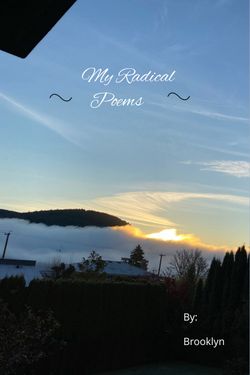
The driving question for this project is ā€œhow might I write poetry that I enjoy and show who I am?ā€ The book above is all of the poems I learned how to put together! Ā 

Before I continue, I’ll show some of the criteria for the ā€œe-bookā€ so you have a bit of an understanding about it.

Ā 


Intro

Throughout the past few days we learned how to do many poems, some of which I had never even heard of! Although we did have a few setbacks, like the snow days (I’ll talk about that later) we did as much as we could in the time we had. Keep in mind, poetry was never something I liked to do in the past, it was always something that I would dread doing in school. So I wasn’t very ecstatic about this unit, although you may see my opinion change through the poems I did. I have found it interesting to read sometimes but it was never something I wanted to do myself.Ā 

Sometimes you are expected to find so much more within the poem instead of just reading it for enjoyment.Ā 


Throughout the many poems styles we created, there were some I liked and others that I wouldn’t want to do again. For example I really enjoyed the ā€œfoundā€ poem. It was fun just being able to pick up a random book and make a poem out of it.Ā 

My Favourite Poem

Ā I selected this book from the LAC room, not really knowing what I was looking for or how it was going to end up. If I had chosen a book from home, I would have flipped to my favorite page, and it would have been good BUT I wouldn’t have put much thought into it. By choosing a book I had never seen, the outcome of possibilities was endless. I had no pre-mindset of what I wanted. The end result was a poem that I’m quite proud of, as it has a lot of meaning, mood and emotions. This poem shows a lot of who I am because it feels like the things I enjoy and is relatable.Ā 

Found Poem

The Ocean Breeze

Stood quite still, listening

The lights glowed

The books were neat and orderly in their cases

The bay stretched dark and silent

It was late September, the night was breathless

Summers dead hand still lay heavy on the land

The tiny spark hissed and went out

In the dark, the moon alone at night

The loneliness, starlight

The other poem I really liked making was the imagery poem. This is probably because I’m a very visual person and I like to paint a picture in my head of how the words turn into a story.Ā 

For example when I was writing about my fish tanks, I felt like I could really picture them as I was writing. There’s DEFINITELY a mood to it. It’s a very bubbly and light hearted poem in my opinion.

Imagery Poem

In a glass oasis, fish dance and shimmer,

Plants sway, creating a watery glimmer.

Bubbling streams, rocks and caves to explore,

A hidden world, a serene place to adore.


The Poem I Didn’t Like so Much

Haikus

Although it is an unpopular opinion, I’m not fond of haikus one bit. What could be easier than writing three lines about nature?? However, I find it irritating when I get a good idea, write it down and it’s not the right amount of syllables. It’s just annoying… not much else to say.Ā 

How May I Write Poetry That I Enjoy and shows who I am?

For me personally, I write poetry better when there are less rules, for example a free verse poem. With a free verse poem you can say just the right words without having to worry about if there are the right syllables or a rhyme scheme and what not. I like poems that are more personal and don’t just say exactly what they mean. That way it reaches the right audience. The poetry I enjoy is creative and about the things I can relate to.Ā 

When I go to write poems the mood and the tone are probably the most important piece of it. How I’m feeling in that moment definitely impacts how the poem ends up and what audience it’s going to reach. I’d say it’s probably one of the biggest pieces of the poem.Ā 

ConclusionĀ 

In conclusion, even though I still don’t ADORE poetry, I do feel my perspective on it has changed. I’ve gained a greater understanding of what it really means to be a poet and that there are so many different poetry styles out there. I believe this project was a good learning experience for me.

Skip to toolbar