Loon Lake reflection

Welcome back to yet another learning portfolio post. The topic? Loon Lake. What is Loon Lake? It’s a lake.1 That isn’t very specific, so for the purposes of this post, it’s where we, the PLP grade 9’s, spent 5 days on a learning “advance”. This post is a reflection on that experience.2

Even though we were only at Loon Lake for five days, they were busy ones. Our days started with breakfast at 8, followed by 2-3 activities between then and lunch, and more between lunch and dinner, as well as one or two at night. The activities ranged from outdoor pursuits such as archery, climbing, low and high ropes, and an orienteering challenge, to workshops with Jono, one of the leaders from Pinnacle Pursuits.

Like with PLP project, even though calling this a project is a bit of a stretch, this post aims to answer a Driving Question: How do the choices we make set our future path?

I’ll let that sit in your head while you read the rest of this post, which is separated into sections like:

The Workshops

In the first few workshops, we took a leadership quiz to help us identify our leadership styles. I ended up with Challenger and Modeler/Encourager as my top two results. Some of the results were traits I already knew I possessed, but others were new revelations about myself.

Over the next few days in the workshops, we continued to learn about ourselves – our likes, skills, strengths, needs, and values. We also participated in activities, especially in smaller groups, to better understand ourselves, learn about others, and build trust.

One of the recurring activities was trust-falls. It began as an activity where a small group of around 8 people would stand around one person in the group, who would then fall into the people, who would redirect them somewhere else. This would continue for a minute or so for each person. For the first workshop, this is all we did, and it was also how we started the second workshop for trust falls. After that, we moved on to the more traditional trust falls with one person falling backward into a partner, then increasing the fall angle with two people to catch you. Finally, we moved to the largest trust fall, where you stand on a chair on a table 3 and fall all the way down to 7 catchers. It was an incredible experience that, in my opinion, actually did help me to trust the people in my group more. The scariest part of the whole thing was catching, as I was terrified I would mess up and drop someone or hurt myself. In the end, everyone in the group ended up doing something that they may not have initially thought they would, be that the fall, catching, or something else.

All of the workshops were interspersed with the previously mentioned outdoor activities, along with a few

PLP specific activities. One of these was a combination of bracelet making and making a representation of ourselves with circularly arranged hexagons (our name being central, things that we like to do, or that otherwise represent us on the 8 outside hexagons). Another activity was making posters that represent us, but I’ll get back to that.

In the workshops, we discussed Emotional Intelligence and related skills and traits a fair bit. We learnt about how these can help (or hinder us) in different scenarios, as well as thinking about what skills and traits we wanted to develop further.
For me, I’d say this trip was really about how we wanted to grow and what skills we wanted to develop, both as learners and people. What we choose to do now, and the skills we learn can affect our future, both near and far in many ways. Right now, our world is at a turning point with technology and AI, and it is very hard to predict how things will be in even 5 years. 4In one workshop, we talked about what skills are ‘necessary’, with effective communication being one of them. I do think that we should still learn specialized skills, even if only for something to do, and because learning those skills usually helps develop core skills.


So far, I’ve made this trip sound a bit dull, talking about all these workshops. Luckily for you and me, it wasn’t all workshops. As I mentioned before, the workshops were interspersed with some outdoor activities, so this seems like

A perfectly good spot to talk about those

Even though we did lots of activities in the workshops to build trust, get to know each other, and learn to work together as a team, the activities we did outside of the workshops also worked to achieve that goal, especially the team-building side of it. Many of the activities were group activities, an example being the Low ropes course, which was a set of challenges that a group of around 12 of us had to get through. There was a timed course where everyone had to make it through as quickly as we could. The first time around we were all disorganized so the second time around we came up with a plan where the fastest people would go last, and then the rest would go from fastest to slowest, with everyone encouraging and helping each other. Our coordination led to us shaving almost a minute and a half off our original time. Another activity, this time more of a “solo” one was archery. Again, everyone was encouraging each other and the people who actually knew what they were doing helped the less experienced people just like on the low ropes.

Another activity that we did was a sort of team race/competition, where we were split into 4 teams. I ended up on the pink team, where we got off to a wonderful start by infringing on the Intellectual property of Metro-Goldwyn-Mayer, naming ourselves the Pink Panthers.5 which I think is one of the reasons we won, sarcasm(definitely not teamwork or anything)] We then had to divide into 4 subgroups, which were the teams we would be competing in. The subgroup I was in started off strong, coming in first for the first activity. We continued doing well, with a bit of a hiccup on the second challenge, placing second, first, and first on the remaining three challenges. While we were doing the challenges we tried to check in on the other members of the Pink Panthers, and at the end, we all compared how we did, and we were all fairly confident that we had won. Either way, almost everyone agreed that it was very fun and that our team worked really well together.6

Now, I could go on for another thousand words about all the other fun stuff we did, and all the things we learned, but this post is getting long. So, for the final thing, I’ll talk about the end of our trip.

Earlier I mentioned the hexes and the posters, and, for the last few days, we worked on putting them all together. We connected all the hexes based on the things people put around as the things that represented them.7,Throughout the week we had been going and writing things we appreciated about people on their posters. To showcase this all, we had a mini exhibition where we broke into groups with each group showcasing one of the things we learned over the week8 to our parents.

Finally, in our groups, along with the parents, we shared a goal based on what we had learned over the week. Mine was to try and identify when to step back and give people space to help and to share their ideas when working in groups, as I sometimes tend towards trying to take control of the project and not leaving room for others to help.

That’s all for now. Until the next post,

-Finn

  1. named after a loon, crazy right?
  2. The title does not lie
  3. don’t worry, there were people holding the chair and table still
  4. for context, chatGPT has been only been around since november 2022, and Stable diffusion was initially released in august 2022, both relatively short periods of time, and they have absolutely changed how many people do things
  5. [SPOILERS
  6. heartwarming story of teamwork and all that aside, we did win, and by a fair margin, which we found out at dinner that night
  7. for example, hockey and hockey would connect, or reading and reading, there were also some double combos, like coding and coding, and nature and nature, stuff like that
  8. my group got self awareness

Take your kids to Work day.

Around a week ago it was Take Your kids to Work day, a national event where students follow their parents (or a family friend) to work.

I ended up going with my mom who is an acupuncturist, on the day she was working at restoration health clinic in lynn valley, we left the house around 8:55 and arrived around 9:10. the first thing she did was unpack the sheets for the tables, then I printed out a copy of her patient shedule for the day. after that I helped her set up the two rooms she would be using for her first patients who would be arriving at 9:30 and 10:00 respectively.

When her first patients started to arrive, I checked them in on her schedule, it was around this point I realized filming would be a bit of a problem, there were people everywhere so there wasn’t a lot I could film for patient privacy reasons, as a result, most of the shots I got were from before people started showing up, and after the last treatments.

In the times between when I checked in the patients and when they left and I billed them, I did a few different things, I ended up spending most of the time in the staff room and while I was there in the morning, I did some payments for my mom, after that I started doing some bookkeeping for her.
Around 12:30 there wasn’t any patients arriving for a bit so I got an interview with the office manager, which took some stress away as that had been the main thing I was worrying about for the day.

We ended up going out for lunch at 1:00, the we went to the bank and were back by 1:45.
Once we got back I finished the bookkeeping and started doing some work on my mom’s website, as there were some problems with it, such as it using mid 2000s social media Icons that might have been older than me. The site was built with wordpress and a custom theme, trying to edit the theme only made me dislike wordpress even more, PHP as well, the nature of the theme meant I couldn’t really change much of the actual content, so I did what I could with styling.
Sidenote 1, I really wish we could add custom plugins and themes, we can already run any vanilla javascript we want on our blogs, I cant see why letting us use custom themes and plugins is that much of a leap, unless its a problem on EduBlogs side. either way, wordpress is kinda inconvenient, I do have some ideas though, so, stay tuned.
Sidenote 2, while looking through the theme I saw that it used the sidebar widget fields for the top menu bar and I cant tell if this is actually a smart idea or not, what do you think?

The changes website ended up taking up the rest of the day, forgetting to save and losing 45 mins of work didn’t help either, and I left around 5:45, as I had a class I had to get to, otherwise, I would have left at 6:15 otherwise.

Overall, the day was alright, but a bit boring, especially since I couldn’t watch any of the treatments, If anything Id say the most interesting thing I learned was how to do my mom’s bookkeeping, which might actually come in handy later, who knows though.
To end off this post, you can watch the video I made! its not very exiting, but id say its a good reflection on how my day went.

The video.

Run! a short reflection on the remake.

over the last few weeks in Maker, we remade a short film called ‘RUN!’ by CookieImagination,1 for the project, we worked in groups and had to try and recreate the original as closely as possible, shots and sound.

On the first day after we were introduced to what we would have to do, we briefly discussed possible filming locations and I made a list of the shots we would need, we then set out to film.

the first day of filming was good, with us getting a bit over half of the shots done, the next day was more of a problem as the person who was playing jogger 1 wore a different outfit, meaning the final product would lack some continuity.
while we were filming I was also recording sounds we could use as I wanted to make all the sounds by-hand, which lead to some interesting results, for example, the sound at the very end of the video is a door slamming, layered with a old violin, a piano and a water bottle.

the editing was the most time consuming part, even though I had the original to reference. once I started editing, I realized that some of the clips were too short, which threw off the timing of the rest of the film, other than that.2

Once we were ‘done’ we watched all the films and gave people feedback, some of the main feedback we revived was about fixing the timing, and improving some of the sounds.

once we had the feedback, the first thing we did was re-film all of the clips that were too short or with the wrong outfit,3 then I edited those into our remake, fixing the audio and timing, as well as adding some small details like colour grading and changing the aspect ratio.
Here’s our first and second versions, along with the original:

First version
Second version
Original
  1. actually, we remade it twice
  2. I also spent way too long figuring out motion tracking for the title sequence
  3. except for 1, try and find it

Humanities: Rocky Mountain high

Recently I went on a trip to the Rockies, with PLP, although you probably already knew that if you read my Maker blog post,1
Now, this post may be a bit odd, as, the project we are working on in maker has had a lot of overlap with this one, so if I end up repeating myself, just bear with me.

Now that I’ve got all of that over with, we can get on with the rest of this blog post.

The trip was around a week long, with us going as far out as Wilcox pass. While we were on the trip, there were a variety of things we were working on, for one, there were the videos for Maker2, but those are, well, for maker.

Now, because I don’t want to write another maker post, and because I’m sure you don’t want to read another one either, I’m going to try and stay clear of anything maker related, unless its necessary3.

Now that I’ve got all of that over with, we can get on with the rest of this blog post.4

There were a few things we did in humanities, both on and off the trip, so, lets start with the stuff before.

The driving question of this project is “How has the geography of the West shaped who we are?”, so the first thing we ended up learning about was what geography actually is, which pretty much all the other bits of the project revolved around. First, before anything else,5 we learned *ahem*:

THE 5 THEMES OF GEOGRAPHY

Which are, well 5 themes, that help us Humans (or students) better understand the geography of a place, which is something we would be doing a lot on the trip, I’ll spare you the detailed description of the themes, as those are in my book. I hopefully can still tell you what each one is called, so let’s do that; 1. Location, 2. Place, 3. Human environment interaction, 4. Movement, 5. Regions. We spent a day or two learning these themes, and then, were told what we had to make, A Comic Life, explaing the 5 themes, which, again, is in my book, which can be found near the bottom of this post.6

Now, as the first trip was going to leave around a bit over a week after the start of the project7 We also had to cover the “West” part of the Driving Question, So, At the same time as we were learning about the 5 themes, we were also learning about a few different things about the west, for one, we learned what “The west” refers to, 89we also looked at the locations we would be stopping, and researched their historical significance, and interest. Finally, we learned about the construction of the railroad, and how it was important to the development of “The west”, as we know it today.
Now, as was artfully foreshadowed, both here and in my maker post, one of the videos for maker, had something that could be counted humanities work, and that’s what im doing. That thing was the planning for the Investigative Video, for the video, we had to develop a thesis, as well as interview questions we would ask to try and support our thesis. I started this process by just writing down a few things I could make my thesis about, then I refined them a bit, and came up with some questions I liked based off of the ideas, then I thought of general locations10 I could interview people at, and then I finally made my thesis, and then changed the questions a bit based on my thesis, somewhere during that process, I decided I wanted to interview locals, which made it harder to find people to interview, as the places we went, didn’t have a huge population, and were mostly tourists, things worked out In the end though, and I got a few good interviews.
Oh yeah, and here’s my thesis:

The west is a geographically diverse and naturally beautiful place, which attracts people to live and work there so they can experience it for themselves

https://www.blog44.ca/finnh/2023/10/13/maker-story-finding-in-the-rockies/
If you want to watch the video, read my maker blog post

Anyways, now that we’ve gotten the confusing maker overlap out of the way, we can talk about the stuff we did while trip 1 was gone, there’s only really one main thing we did, other than some more work on our theses and our trip intentions, 11 and that thing was…

LEARNING ABOUT THE HISTORY OF BC AND THE CONSTRUCTION OF THE RAILWAY WITH EVENTS SPANNING A GOOD HUNDRED YEARS OR SO

Yeah, It doesn’t have the same pizzaz if its too long, Anyways, that is what we did, we did this over 2 or so days, motivated by a upcoming “quiz” which we wouldn’t learn the nature of until right before, that possibly may have caused small amounts of stress. Some interesting tidbits worth mentioning are below:

Some interesting tidbits of information are here

BC used to share a land border with Oregon
Vancouver island was colonized to prevent Americans from expanding north.
The gold rush is what caused people to move to BC, with ~500 settlers in victoria before the rush and ~30000 people after.
The capital of BC used to be New Westminster before it was changed to Victoria in 1868.

Now, let’s talk about the actual trip, trip 2. The one I was on. It happened after trip 1.

The trip was around a week long, with us going as far as Wilcox pass. We went to all sorts of places, and went on many hikes, which were wonderful, and while we were there, we worked on quite a few things, for one, there were the maker videos, there was also the 5 themes comic life, but, most importantly, the Multi Touch Book, for the book, we had to fill out pages with information about locations we visited, and how they relate to the driving question, as the places often had lots of information, and we often had limited time, I used a system where I took notes for a day with possible video clips, good photos, and information about places, and then worked on the book using that information.
Anyways, I think that’s enough explanation of the book, so, here it is:

Anyways, I think that’s a nice place to end this blog post, assuming you read the book that is.

If you want more blog post, feel free to read this story that I had nowhere else to put:

While we were on the trip, we stayed in a lot of different places, one of those places was in Banff, we stayed there for 2 nights, and then, had to pack stuff up and leave , while we were packing our stuff, I was in a bit of a hurry, so, I ended up forgetting my copy of the fellowship of the rings , which, although being an old and tattered copy held some amount of sentimental value, when I noticed it was missing, the next morning I called the hostel and, they had it, so I a family friend who lives in banff picked it up and mailed it to us.

  1. Or the title of this one
  2. except for part of the investigative video
  3. foreshadowiiing!
  4. no, this is not an error.
  5. Save for Launch
  6. if you want to skip all the other bits
  7. F my memory serves
  8. in the context of our project, BC and Alberta, The west bits of Canada.
  9. I’m still not sure how far north out idea of “the west goes but, I feel like assuming it goes into the Yukon and Northwestern territories isn’t a huge stretch
  10. Like Hiking trail, Visitor center, not specific locations
  11. These are basically what we want to do on the trip, based on how last trip went, there was Behavioural and Academic intentions, my behavioural intention being to not get as stressed about being behind schedule or issues like the bus breaking down, and my acedemic intention was to be prepared before reaching a place, by checking whatI need to do there (film for a video, try and interview someone, Multi-Touch-Book Page) as well as just general info on the place.

Maker: Story finding in the Rockies.

Another project, another blog post.

I recently went on a trip to the rockies with PLP, and, as it was a PLP trip, there was a whole 2 projects about it, due to the constraints that blog-space logic applies, I can only talk about one of those projects here, and, due to another quirk of blog-space, I should probably start this post pretty quickly.

Quick warning, I’m going to say this in my humanities post as well, but there was a lot of overlap between the projects, so I might repeat myself between the blog posts, or cross reference between them, so just bear with me, Ill also try and provide links back and forth for the more important stuff.

Alright, Back to the trip, while we were on the trip, we worked on a “Multi touch book”, now, most of that is all humanities stuff, and this is a maker post, so lets talk about the maker stuff.,

The “Maker stuff” in question is 41 Videos, with 3 of those videos being filmed while I was on the trip, now, the reason they are all videos, is that this project is about making videos. Now that im talking about the actual project, I might as well show you the driving question:

How might I use the moving image to tell a story?

Now, Unless you’ve been reading every single one of my blog posts, you probably wouldn’t have noticed this, but this driving question shares a lot of similarity to that of the “Making Interesting Images” project, from last year:

How might I use the still image to create and communicate through technology?

Now, there’s a pretty obvious difference as well, one is about the “Still Image” or photograph, and the other is about the “Moving image” or video.2 But they still share similarities, they are both about communicating something, although the more recent project is more clear about what it is that needs to be, a story.

Now, as I mentioned before, there was four videos we had to make for this project, I’m going to go through them in the order they were completed, just to keep things simple.

Now, even though this project was called story finding in the Rockies, the first video has nothing to do with the Rockies. This is because there is around 50 people in PLP9, so were split up into 2 different trips, each with 24 kids3 , so the teachers didn’t have to deal with the full 50 at once.

I was on Trip no. 2, so, in the week while the first trip was away, we worked on our first video, What Inspires Me, This video was based off of part of the summer learning we did, of the same name.
The video was interesting to make because we were given a lot of creative freedom, My video ended up being a sort of self interview/documentary. I’ll talk about it more, but first, here it actually is:4

My “What inspires me” Video.

This video was interesting to make for a few reasons, for one, like I mentioned before, this was the first video, so I didn’t have much of an idea as to what the best way to go about things were, so, I ended up just sort of creating problems and solutions5, as I went along.
I started the whole process by writing a script, I dont really have much of a method for this, so I just end up writing down whatever sounds right, along with some notes about framing, possible B-roll, and stuff like that, and then just refine it as I get to filming it.
The Filming of this video was full of the self created problems that I mentioned before, first off, as the camera ( my IPad ) was fairly far away from me, to get good audio, I had to record the audio on my phone, through my earbud mic6 and then applied some enhancements to remove all background noise. I also needed to actually read my script7, which meant I needed to have my laptop somewhere out of shot, but in my view, which resulted in some wonderfully horrible setups, for one shot, my iPad was balanced on a water cooler, with my laptop on a stack of books and boxes, all on top of a rolling chair. luckily I only needed one or two takes, so I didnt have to use it for too long.

The making of the clock sequence,.

One part of the video that probably stood out to you is the clock sequence, so here’s how I made it: To be honest, I wrote the clock sequence before a good of three quarters of the script, In the original draft, It was just some notes on tempo, and a few shot descriptions along the lines of : “Clock ticking, hold, 1. 2. 3. 4. Black screen, Clocks flash on the screen, once per beat. split. Have clocks all be slightly out of sync by ~ 1/5 beat..”. and so on.
To film it, I went around my house and the school, filming clocks, then I brought them into my editing software, along with some clock sound effects I found, synced the clips to the sound, loosely following my script and, yeah, that’s how I made it.
“Fun” “Fact”: there was a whole second sequence after the clocks, which was left out because of… time constraints

The next video8 was the first one to be filmed on the trip, 9and it was a group project, A silent film, It was to be filmed at the three valley gap ghost town, on the first day of our trip. As I mentioned before, I don’t really have a process for writing a script, and pretty much the entire video had to be planned before hand, as we would have limited time to film on location. Everything turned out okay in the end, and we wrote up a mostly coherent story, as well as some rudimentary shot descriptions, provided by me. When we arrived at the ghost town, we had a bit to look around, so we could double-check the locations we wanted to film in. We did end up having to change a few of our locations, as they wouldn’t have let us get the right angles for some shots. we also had to add on a whole extra part to the beginning of our video, because it turns out out script wasn’t quite as coherent as we thought. Even though we had to make a lot of adjustments, I still think our video turned out pretty well, so here it is:

Silent film.
some more “Fun” “Facts” about the silent film.

As I mentioned before, the film was shot at Three valley Gap, but the majority of the editing was also done there. The film was edited by two people in our group, Me, and Ailie. I did most of the visual editing, and Ailie did the sound.
I ended up planning out all the shots for the film, the fact that the film was a “silent” film, meant that we had to figure out ways to show our story, without dialogue, we used sound to help create mood, but we also used framing, which led to some interesting choices, one of which, was to only show the murderers feet, so as to not reveal who it was, this ended up requiring some interesting setups for some shots, for example the shot at 1:00, which has the murderer walking out of a building, with the detective entering the building right after. I tried a few different angles, but eventually settled on the camera directly facing the door.

Now, the next video is the “Vertical Aspect Ratio, Short-Form-Content style video”, This video was filmed over the course of the trip, It was also pretty interesting, because it was very spontaneous, I came up with the idea right near the beginning of the first walk we did, when the song in the video popped into my head,10 so, I took out my phone, and took a short video of me walking, I continued doing this on most of the hikes we did along with at some other interesting places. after the trip, I took the videos and put them in order with the music, along with some other videos me and James took.
There’s not much else to say about the video, so, here you go:

Now for the last video in this project, the Investigative video, Like I said before,11 technically only 3.5 of the videos were maker, this one is the 0.5, The reason for that, is because this videos planning was in Humanities, and not just because of weird timing. Now, right now, I’m working on the blog post for Humanities, so, if you’re reading this right after I release this blog post, it wont be here, check again in 4 days or so, if you are reading it after the humanities post releases, this explanation probably won’t be here, Either way, Ill talk more about the humanities parts of this project In that post. Now, lets talk about the maker parts.
the maker parts, in question, is mostly the editing of the video, For the video, I did 3 interviews while I was on the trip. so, when I got back, all I needed to do was put them all together, right? not really, because 3 interviews on their own, is just that, 3 interviews, the point of the video is to support my thesix, so I had to do that, I ended up writing a quick script, and recording beginning and end bits so I could explain the interviews and what they are supposed to support. I ended up wanting to have a green screen effect, which meant I needed a green screen, I found some green fabric, and attached it to my wall, I’m honestly impressed it worked as well as it did, as this is what the setup looked like:12

So. I filmed the beginning bit, and edited it in along with the interviews,13 and then, I got sick, and couldn’t film for the whole weekend, and, after the weekend, I was like 3 days past the “deadline”, so I didn’t edit the end bit in, but of course, the “deadline” wasn’t actually the deadline, so I added in the ending bit, and this is what the final video looks like:

Anyways, with that, I think this is a perfect time to end this blog post, although you can still read the footnotes14

  1. 3.5 if you want to get technical
  2. It’s almost like they worded them like that on purpose to establish some sort of connection
  3. If you noticed an error in the math there, 2 people didn’t go on the trip, the exact numbers still might be wrong though
  4. The video was supposed to be 1-2 minutes. mine is technically 3, if you remove the credits and intro, 4 if you dont
  5. often at the same time
  6. Because for some reason, the mic on apple earbuds is incredible
  7. except for the bits short enough to memorize
  8. more or less, the timeline gets funky once I actually got on the trip.
  9. which you already knew if you read the footnotes
  10. The song in question being “I’m gonna be (500 miles)” by The Proclaimers
  11. in the footnotes
  12. Ignore the chair
  13. Land a healthy amount of subtitles, which probably was one of the most time consuming parts of the whole editing process, because the audio on some of the interviews was… not the best
  14. This is the actual end of the blog post

The medium is the message ( and spring exhibition)

Alright, so another blog post. It seems like I’ve been writing a lot of these lately, and that’s because I have. The reason for the increased number of blog posts is because, as the school year is coming to a close, there are more projects finishing, one of which is “the medium is the message”, The way this project ended is different from most of the other projects I’ve done, an exhibition.

I’ve talked about the concept of an exhibition before in my winter exhibition blog post, and if you read it, I’m sure you are well aware of how it went. if not, then you probably should, as it will provide context for this blog post. (I’ll be nice and put a link in.)

https://www.blog44.ca/finnh/2023/01/06/winter-exhibition/

Now that you’ve read the entirety of that blog post (you did read it, right?) I can start talking about this exhibition.

Now the exhibits were different in many ways, the most obvious being the name and, as an extension of that, the date. Now, I’m not too sure whether or not the exhibition has always been on the exact same day; if so, kudos to whoever did that, but either way, I think it’s probably fair to say that the winter exhibition has always been in the winter and the spring exhibition in the spring. Now that wasn’t the only difference between the exhibitions; one of the other main differences, at least for me, was that the spring one was more… muted; I’m not entirely sure how to describe it, but it just seemed less monumental. That probably was just because I had experience with an exhibition, so I was a lot less stressed out, but who knows?

Another difference between the winter and spring exhibitions was that the spring exhibition grouped people up depending on grade rather than just clumping people into a room like the winter one, which makes sense considering that the project we did for the spring exhibition was much more of a group project than the one for the winter. Now having all of the grade 8s in one room did have disadvantages; for one, it got loud, which made it pretty hard to talk to guests; the other thing is that because of the sheer number of booths in the gym, people often didn’t visit them all; and finally, there were a lot of 8s just wandering around; why were they wandering around? Because we didn’t have set break times, on the winter exhibition everyone had a time when they could go on break; however, it was very short, only around 15 minutes. For this one, there was no break schedule, so a lot of people just walked around the gym. The thing is, having no set time to go on break made me unsure as to whether or not I could go look at the other rooms, and when I did, it was very rushed because I didn’t know how much time I had, and I ended up missing the grade 9 room entirely.

Now, while the spring exhibition had its flaws, it was far better than the winter exhibition in terms of smoothness. Remember the muted feeling I discussed before and how it probably related to being less stressed? While the winter exhibition was a rushed and disorganized event, the spring exhibition just happened. A few things that I believe contributed to this are as follows:

One: Time. While the winter exhibition had us cobble together our project from practically nothing in a week and our room in even less than that, the projects at the spring exhibition were the results of a month of learning, and while they were far from as large as the rooms of the winter exhibition, the week we had to design our tables made them look much more polished.

Two: experience. With the 8th graders knowing what to expect from an exhibition and the higher grades having a refresher on it, everyone was much more prepared for the spring exhibition, so we had a much more solid idea of what to do (and what not to do).

Three: autonomy(well, partial autonomy). As we had experience from the first exhibition and had worked on this project for far longer, the teachers stepped back a fair bit for this exhibition, leaving a lot more to the students. With the freedom this provided, we were able to work much more quickly to get our final product out into the world.

Now that you’ve read that, I can move on. I mentioned our projects briefly, but I believe it’s time to go into more depth about them, specifically mine; other people talked about their projects in their blog posts, probably.

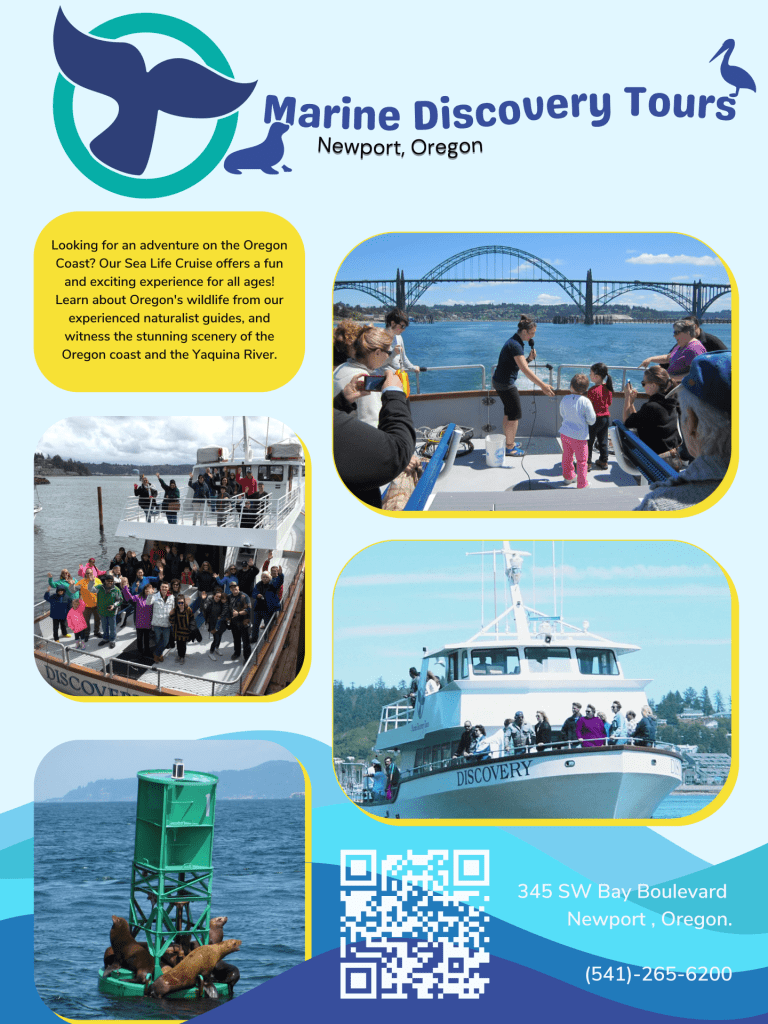
For the winter exhibition, we were showcasing the product of the project “The medium is the message”, an advertisement. To make the advertisements, we first had to learn about what makes up an advertisement as well as advertising techniques, and then we went to Oregon to interview a business there about what to put in their advertisement. I’m being brief about this, as I’ve already talked about it in my Oregon reflection. I’ll put in a link for that here:

https://www.blog44.ca/finnh/2023/06/09/oregon-coast-field-school/
What I didn’t talk about in that was probably the actual process of making the ads, so I’ll talk about that.
Making the ads was difficult for a few reasons. One, it felt stressful having such a constrained amount of time, but I did get a decent draft out of it. Another thing that was difficult was that sometimes what we were told to put in our ad by our business conflicted with what the teachers wanted in our ads. Another thing was that we weren’t really taught how to make an ad or told specifically what kind of ad to make. We did do a “design workbook,” but honestly, it wasn’t really very useful.

Anyways, here are my drafts. As you can see, it took a lot of iterations to get to the final ad, so instead of talking any more, I’ll just let you look at them:

So, you can see how throughout the different drafts my project changed, starting with pretty much nothing and then slowly evolving. One of the things i struggles the most with when getting to the final draft was my ad “looking like a poster rather than an ad”, so I had to cut a lot of information out of the ad, im still mixed on whether that helped the ad, it certainly looked nicer, but I wonder whether or not it fit with what our client wanted.

Moving on from that, there was the exhibition, i talked a fair bit about how it went, but I’ll spend a bit more time on it.

Setting up was rather problematic, because, when we were getting our tables together, someone from the Columbia river maritime museum stole one of ours, and they just kept getting more, so they got like 5 tables for only 6 people and we had to deal with 4 for 7, so that’s why it looked kind of cramped. Another thing that happened was at one point ms Willemse took a bunch of people to go on the grade 12’s tour, which really cut down on the number of people at our table, which made things slightly difficult. Anyways, either way the exhibition went fairly well, ans its over now.

Below is a photo of our groups booth for the exhibition.

Above is a photo of our groups booth for the exhibition.

And that’s my blog post.

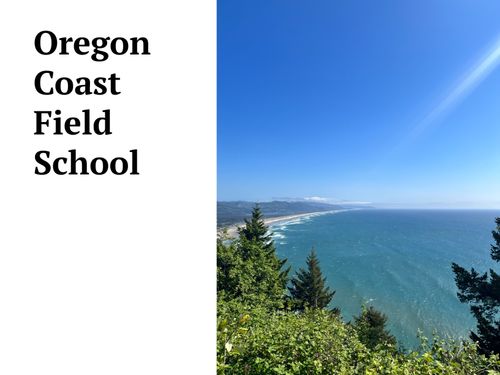
Oregon Coast Field School

I recently got home from Oregon as part of a field school for PLP, and this post is intended to serve as a reflection as well as a record of the project. Anyway, I’ve put off writing this for a bit too long now, so I guess I’m just going to start this post now.

now.

now.

now.

Part 1: Seycove

Okay, enough of that. Let’s get into it. First off, let me talk about why we went to Oregon in the first place. The main reason is that our current project in the humanities is on advertising and how companies use it to influence us. So, rather than just teaching us about advertising, we actually made advertisements, and of course, we couldn’t just do them for a local business; instead, we did them for businesses 400 or so kilometres away.

Before anyone left for Oregon, we still had some stuff to learn about. I mean, it is school after all, so the first thing we learned was pretty much the minimum needed to understand the rest of what we were learning.

First off, we learned what media is, what advertising is, and some fun terms like “the consumer”, “mass media” and “target audience”. Once we had a hat on that, we started looking at actual ads and looking at the concepts and ideas used in them, and finally, after learning the concepts behind advertising, we did a little thing where we answered some questions about how advertising and branding affect us, got another person to answer them too, and wrote a paragraph on the question “What is media”. That pretty much wraps up Keystone One, and that meant that Oregon Group 1 would be leaving.

So, after the first group left for Oregon and the rest of us moved onto Keystone 2, which was like Number 1, but this time we were learning about techniques used in advertisements, I’ll get through this Keystone fast because there is a lot of stuff. First off is demographics, which is sort of like a group of people that ads could be targeted at. Next, we looked at specific techniques that people use in advertising, so basically, there are a lot of fancy terms for different things that an advertisement has. On the topic of fancy words, we also talked about pathos, logos, and ethos, which are fancy Greek words that are basically different ways advertisements can try to persuade you, with pathos appealing to people’s emotions, logos to logic (a pretty easy one to remember), and ethos to credibility.

Once we got all that down, we finally combined this new knowledge with what we already learned in Keystone 1 to analyse ads and the techniques they used, and that was Keystone 2.

Part 2, oregon.

So, the first trip came back, and we had one day together. They shared their favourite part of the trip, and a favourite was ziplining (foreshadowing). That day was more or less chaos, though, so there isn’t much to say about it. Anyway, the second group was going to be leaving on Saturday, so I’ll talk about that.

So on Sunday, (tthis is the part where you say, “Wait, Finn, didn’t you say you were going to talk about Saturday?” and I reply, “Well, of course, but because of a scheduling issue, the kids in band would have to leave on Sunday because of the caberet?” And then you would respond, “Well, can I hear about the band concert?” And I would oblige. Fine, on Saturday I did the band concert, which went fairly well, but it was rather disappointing that we couldn’t watch anyone else perform because they were serving alcohol, which apparently makes it so you can’t let anyone under 18 into the gym (except when we are performing, I guess).

After that, I went home and then received the news that I would not be leaving at the predetermined time but rather at some unknown time. This,  of course, caused disproportionate amounts of stress, which lasted into Sunday. We did eventually leave on Sunday at 12, and this put us very behind schedule, so we ended up missing two days of the field school, including ziplining, which was said to be quite fun. must have been nice. must have been reeeeal nice.

Anyway, all that aside, once we got to Oregon, things went relativly well. It was cool actually being somewhere that isn’t Seycove with PLP.

There were a lot of fun things we did in Oregon, starting out with the Columbia River Maritime Museum, which was cool because we got to learn the history of that area, but it did seem pretty rushed. The same day we went to pig and pancake, Canon Beach, and Tillamook Creamery. Out of the three, I preferred Canon Beach; pig and pancake was good, but the hour-long wait was a bit boring; and Tillamook was interesting in terms of seeing the machines working, but the yoghurt and ice cream weren’t my favourites. After that, we got to where we would be spending the majority of the nights and went to bed in our yurts at the “campground name” campground.

The next day we headed to the marine discovery tours, where we boarded a boat and spent 2 hours on it. My favourite part was when we were out in the open ocean and there were waves that rocked the boat a tonne. We also spent a while by the bay and river. although that was less interesting. After that, I had my interview, which went well but I feel like it could have been longer. After that, we did a quest, which was medium-rare chaotic. After that, we had lunch and went to Hatfield Marine Science Centre. After a lesson on crab racing and another on shrimp slurping and measuring (and citing science, but that’s probably not important), we were let free into the visitor centre, which was once again a bit rushed but pretty neat. There was a boat captain simulator, but nobody in our group got to use it because people from the group before us ate into our time. After the visitors centre, we went for dinner at a buffet, which was uneventful and therefore completely undeserving of this mention.

The next day we went back to Hatfield Marine Science Centre and made ROVs (underwater remotely operated vehicles), which was really fun. After that, it was the worst quest out of all of them, with none of the teams getting more than one clue. Moving swiftly on, we then went to Yaquina Head, first to the interpretive centre, which was, you guessed it, kind of rushed. And then went down to the beach, which was amazing. It was all stones, and it had tide pools that were full of sea life; I even saw part of an octopus (it was hiding under a rock). After that was the easiest quest of the trip, with an amazing view as well.

After that, we had probably the best dinner on the trip at Kam Meng and went back to the campground. Later at night, we went for a walk down to the beach, and I got some really amazing photos.

The next day was breakfast and then a long drive to Bullwinkle’s, which is like a “fun park or somethingTM,” which happens to be named after a character from an old cartoon. As a result of this, when we were having lunch, there were four TVs playing old cartoons. I know it was supposed to be something, but without audio, those old cartoons just gave off a kind of dystopian or propaganda vibe, and the four screens definitely didn’t help. The actual activities were pretty fun; I played a riveting round of mini golf and somehow didn’t cause an accident in go karting, among other things.

After another long drive, a dinner, and another long drive, we arrived at a hotel that provided the best sleep of the entire trip and the best breakfast of the entire trip, because as good as nutella croissants are, actual protein is better.

The final day of the trip held Wolf Haven, my favourite stop. It was incredible to see wolves, as well as just walking out through the field to the funky tree, by far the best stop.

After that, not much happened; we went to a mall; it was alright; then we had another very long drive, crossed the border, and drove back to Seycove.

Impressions

Overall, the Oregon trip was fine, but it was pretty stressful, especially with the change of departure times, and missing ziplining was kind of a bummer, but we went to a lot of cool places and did some neat things, so I guess it sort of balances out. One thing is for sure: “picnics” aren’t what you think they are.

Now that I’m back at home, I can look back at this and think, “I feel like it wasn’t only about interviewing the people, and if it was, then that was a giant waste of time.” That’s my blog post.

Oh yeah, here’s my Oregon journal:

and here’s some things I 3d scanned:

And some photographs:

Humanities, Consequences of Colonization.

I’m writing another blog post, and it’s for humans. I mean, there are only two classes it could be for, and I just wrote a blog post for science.

I’m sure you could tell by the title of this post what we learned about this time around, but if you didn’t read the title, it’s about colonization, or more specifically, the consequences of colonization.

I’ll spare you the extra details for now, so we can jump right into what we learned.

The first keystone was, as per usual, just learning what it is we’re learning about.

we started off by learning about the fur trade, which was one of the main reasons people decided to start colonizing canada.

the fur trade was basically the Europeans trading goods with the indigenous people in return for beaver furs, as they were in high demand for hats back in Europe because they had hunted beavers almost to extinction to get their furs, so when they got to this new land and there were beavers, they realized they could make a lot of money from that they set up trading posts to trade with the indigenous, trading things like metal tools, firearms, liquor and tobacco, for the furs.

companies like the hudsons bay company, and later the northwest company formed to trade with the indigenous peoples. this opened up many job opportunities, which made more people move to Canada, starting colonization.


The thing with colonization is that we, Canada, started out as a French colony( we are learning about the colonization of Canada after all) and, without colonization, we probably wouldn’t be here, so that’s a good thing, right? Well, here’s the thing: there were many different people involved in colonization, and colonization affected them all differently. And that’s the problem: we can’t really say that canonization was objectively good or objectively bad for everyone because different groups of people experienced it differently, so that’s it. That’s the problem.

Now, for the other half of the problem, if we are going to investigate colonization, we have to consider all the perspectives of the people involved. Now, that would require a lot of research, so we all chose a group of people to study. I got the indigenous peoples, and I had to write a worksheet about their perspective and motivations for going to Europe, or in my case, interacting with the Europeans. That was the keystone one. Here’s my worksheet:

Now on to Keystone 2!

For Keystone 2, moving on from learning about the fur trade, we started learning about ethical judgment and presentism, as well as looking at the motivation for people to move to Canada.

Presentism is basically saying that if we are trying to decide if something is good or bad, we can’t think about it using modern values as a reason. Using an example our teacher used, back then you had to wait 3 months to write to someone in Europe from New France and get a response back. That seems like it would have sucked to us, but to them it was still great being able to communicate at all.

That isn’t to say that things weren’t wrong; another example is that people used to own slaves, but we can’t say that’s right just because that’s what people did back then.

The final product of Keystone 2 was a paragraph organizer where we outlined a paragraph about whether or not colonization was good and for whom.

This took a bit longer than I expected to do because I had a band trip and missed a day of school because of that, and I was busy the entire weekend.

Now for Keystone 3.

For keystone three, we actually started looking at the consequences of colonization, looking at the treaties put in place in the fur trade, the results of the colonizers continuing to colonize (i.e., they weren’t stopping for much), and how colonization continues to affect us today. I was really brief on this because it was more of the same as the other two keystones, and I want to talk about the end product.

The script, the final project for this keystone, was an AR MAKR video, made in the groups we had been working with from the beginning of this product, and of course, a video needs a script, so that was the final product of this keystone, and here it is:

script

[talk at a consistent speaking rate of 180 wpm]

The indigenous people are an important view from which to consider colonization, but, as the different tribes are diverse in their experiences of colonization I had to choose one, the assiniboine to examine colonization through.

the assiniboine originally inhabited the great planes region of present day canada and the upper united states, having split from the sioux around the 1630s , and sharing hunting grounds with the Cree and Blackfoot tribes.

when the europeans arrived and the fur trade started up they participated in the fur trade like many other tribes, trading beaver furs for goods such as cloth, liquor, tobacco, metal tools, and firearms.

as well as trading the assiniboine also acted as intermediaries, allowing the europeans to spread their trade to the tribes living further out in the plains.

as more people came to canada, they spread european diseases such as smallpox among the assiniboine, wiping out almost 4/5 of their population.

along with the spread of disease another negative effect of colonization on the assiniboine was the loss of their land from the treaties, a set of agreements between the indigenous peoples and the government that promised regular payments, education, medical aid and the freedom to continue following their traditions and hunt and fish on the reserves, however, many of these promises were not honoured by the government, who continued to take land from the indigenous people.

To wrap things up, the Assiniboines experience of colonization was far from positive, while in the earlier part of colonization they may have benefited from the fur trade, the spread of diseases which wiped out significant parts of their population and the treaties which caused them to lose large amounts of their land far outweigh any positive impacts of colonization.

and now, for Keystone 4!

It’s the video, keystone 4 is just making the video, I don’t know what else you expected I was just talking about the script after all. Anyways, after writing the script, all we had to do was, as a group, put everyone’s personal scripts together into one group script, put together answers to two more questions, and figure out who was speaking and when.

Then, after getting our script approved, we went into the woods behind our school, which are beautiful, save for the random garbage, to record our part, talking over a symbol of our group of people, and then we put all the videos together into one long video.

This is where I would put our video if I actually had a copy of it, but I don’t, so instead I’ll end this blog post here.

The End.

( I will put in the video, if I can get it )

Science, Mind over matter

Alright, I’m back for another blog post, and once again, it’s for science. This is only my second science blog post, and this one is pretty interesting. It’s also slightly different from my normal style of blog post; you’ll see how later.

Anyways, moving on, let’s get right into the work. First off, we have the first keystone. There’s not a lot I can say about this one, but I’ll still try.

So this first keystone was essentially just learning what matter even is. You can pretty much sum that up with two words: mass and volume. Matter is anything that has both mass and volume. Pretty simple, right? well. What is mass? What is volume? Well, basically, mass is how “heavy” an object is. I put heavy in quotes because, while mass is similar to weight, they are not the same. Weight is how much something weighs (pretty obvious, right), but weight can change, say if you’re on the moon. Mass, on the other hand, stays constant, so an object will have the same mass no matter where you are. Volume is how much space an object takes up, usually measured in cubic units or a unit of volume such as a millimetre.

1mL=1cm^3

Now, mass and volume are the defining properties of matter, but matter has many more properties. I mean, if I told you that an object was 354g and 3 cm3, could you tell me what it was? I’m going to assume you said no to that, and if you didn’t, you might want to double-check your answer. Anyway, my point is that matter has more properties. Now, the properties of matter can be divided into two different categories: chemical and physical properties. We’ve already looked at physical properties, but there is still one I haven’t told you about, and that’s density. In a nutshell, density is how much mass an object has in relation to volume. You can calculate mass, volume, and density like this:

Density = \frac{Mass}{Volume}

Mass = Density \times Volume

Volume = \frac{Mass}{Density}

Now for chemical properties. I’ll be quick with these as they can be a bit confusing.

Basically, chemical properties define how matter reacts with other things. Some examples of chemical properties are reactivity( how reactive something is to other things). conductivity, flammability( how easy it is to burn), radioactivity, and pH (how acidic or not things are).

After we learned all that( which took the better part of a week), we then did our keystone, where we had to describe an object in as many ways as possible. Here’s my description; see if you can figure out what it was:

  • Mass: 0.47g
  • Volume: 0.1g
  • Density: 4.7 g/cm3
  • Physical properties:
  • copper-plated iron.
  • made of extruded wire shaped into a loop similar to a trombone.
  • Conductive.
  • Chemical properties:
  • Corrodible

It was a paperclip.

Keystone 2

in which Finn and his friends dissolve a gummy bear.

Keystone tw: This is where things actually start to get pretty interesting. To begin with Keystone tw, we started off by learning about the different states of matter: solids, liquids, gases, and plasma.

Pretty simple, right? Then, after that, we learned about the kinetic molecular theory and why the different states of matter behave the way they do. Let’s cut right to the chase. In short, the kinetic molecular theory is:

  1. Everything is made up of molecules.
  2. The particles exist in empty space.
  3. In solids, the particles are packed together with little room to move; in liquids, they are still packed together but they can move around; and in gases, they are very spaced out with lots of room to move.
  4. The particles are always moving; in solids, they jitter around; in liquids, they flow around freely, moving past each other; and in gases, they move in a more or less straight line, bouncing off the walls.
  5. Finally. Energy makes particles move, and the more energy there is, the faster the particles move and the more spaced out they can get.

So, that’s the kinetic molecular theory, or KMF. It only took us like 3–4 days to learn too, yay!

Oh yeah, one more thing about the KMF: it’s also the reason that things change states of matter. Most pure substances (substances that only have one kind of particle) can exist in all three states of matter because the particles move faster as they get more energy, and because of that, they get more spread out. Pressure also plays a role in state changes, but I’m not super sure why. I found a couple of charts on Wikimedia Commons that kind of show how temperature and pressure affect state change:

Anyways, that’s a state change, and I honestly found it really interesting (foreshadowing)..

Now, diffusion is when one type of material mixes with another; think dye in water. Because particles move around more when they are hotter, they diffuse faster.

So that brings me to the actual keystone part of Keystone 2. What we did was come up with a hypothesis relating to how a gummy bear would diffuse. We had to work in teams, and to avoid legal trouble, I’ll give you the names of the people I worked with:

Caelum and Parker

Now that that’s over with, I’ll tell you about our experiment. Our idea was that pressure would make the bears diffuse faster, so, as for some reason our school does not have a pressure chamber, we had to… improvise. We used baking soda and vinegar to create pressure, so we ran four different tests, one with just water, one with water and vinegar, one with water and vinegar and baking soda, and one with baking soda, water, and vinegar, sealed off. We then left them for 24 hours and came back the next day to observe.

We were wrong.

The gummy bear that water diffused into fastest was the one in plain water; second was water and vinegar; and the other two were the same. One interesting thing was that the bears in vinegar and vinegar and baking soda became desaturated, with the ones with baking soda being the most so.

I couldn’t find an image of the bears, but I’ll put one up when I do.

Anyway, moving swiftly on:

Keystone 3

in which Finn makes a game

Yes, you read that correctly; I made a game, but before I can tell you about that, I need to tell you about what we learned.

I want to get through this quickly so I can talk about the game, so I’ll keep this short.

In Keystone 3, we learned about atoms.

We started by learning about what atoms are. Atoms are the smallest possible amount of an element. Note how I said element because atoms are also made of particles called subatomic particles (creative right) called protons, neutrons, and electrons.

The protons and neutrons form a structure called the nucleus, which sits in the centre of the atom, with the electrons in a cloud surrounding the neuculus. What kind of element it is depends on how many neutrons, protons, and electrons there are; for example, hydrogen has a single proton and a single electron; iron has 26 protons, 30 neutrons, and 26 electrons. Every element has a different atomic makeup.

Anyways, now to the game. For the final project of Keystone 3, and this unit, we had to make a video game about a concept we learned in this unit. As you can imagine, I was extremely excited, to say the least, as game development and programming are some of my favourite things to do.

So as soon as I got the prompt, I started brainstorming ideas. About 2 minutes in, I came up with the idea of a puzzle game where you change states of matter to solve puzzles. Not wanting to just use the first idea that pops into my head, I spent another half an hour trying to come up with other ideas, but I couldn’t come up with anything better, so I went with my first idea.

After coming up with an idea, I started trying to figure out how exactly I was going to get this done. Most people were going to be using scratch, but by its block-based nature, it’s much more limited in functionality.

I decided I would use a dedicated game engine. After looking at some of the web-based options, I decided I would need something with more power. I also didn’t want to have to learn something new, so that left me with three options: Godot, Unity,  and Unreal Engine.
Unreal is, as far as I can tell, aimed at 3D experiences, and I decided that the game puzzles would work best in 2D, so that left me with Unity or Godot.
I decided on Unity because, as much as I love Godot, it just isn’t quite as powerful as unity.

Once I had the logistics sorted I started actual development.

I got sick for around 3 days right when we started working on our games, it sucked to be sick but it did give me a lot of time to work, so I made a lot of progress during those first few days. i also took some videos of my progress that I’ll put up here, its also worth noting that I have a git repository for this game, so that’s another way you can see the progress I made:

github

my first progress log, including buttons and doors, as well as a player controller for the solid state.
My second progress log, with boxes the player can pick up and use to interact with buttons and elevators.
my third progress log, with lasers and some testing with post processing effects.

sadly that is where the progress logs stop and I didn’t record any more. I do have this video which shows off the gas and fluid simulations

fluid and gas simulation

anyways that’s all I have for now, I’ll release some betas on the github at some point and Im also working on an itch.io page for the game here.

Science: Small but mighty

Alright, so, another blog post, this one, however is for science which, because of the semester system I only started a month or so ago,1 anyways in that time we have grown possibly dangerous amounts of bacteria, personified the cells of our immune system and made a poster featuring only the finest art by first graders.

Anyways, here we go, from the beginning.

So, leading up to keystone 1, we started by learning about what cells even are, so that was a lot of time looking at random things under the microscope,
then we were set free to roam over school and told to swab a surface(or two). We placed these samples inside of a dish, and sealed them up with a hope and a wish, To grow some cultures, and see what we’d miss, Would there be bacteria, or maybe some mold? Or something more exciting, yet to be told?

Okay, enough rhyming,2 so we waited around a week and let the bacteria grow, and at the end, well, a picture is worth a thousand words!3

apologies for the bad photos, the conditions were… far from ideal and I was a tad rushed4

anyways after the bacteria were sent off the be burnt to death5 we moved on, and started discussing the immune system and how we actually defend against these pathogens6, after leaning about all the different actors at play, we then set out on developing a personality and an illustration of them7 and put it all together into this

this might be a good time to mention that we now were being taught by a sub, as ms kadi went to Florida with PLP 108, so just putting that out there, anyways, we moved on to bias and misinformation and talked about various myths about vaccines, then made a infographic9, to educate “the public”10 about that myth, so here’s that thing:

Infographic made by Finn and Quin

after that we quickly11 moved on to the public heath poster. I don’t have much to say about this, we basically had to make a poster for kids teaching them about heath, oh yeah, and we had to include their art, which was… questionable at best anyways after a few days of work I came up with this:

a truly beautiful piece of art.

anyways that wraps up this post, ill see you in my next obligatory unpaid writing job.

  1. Yes the same semester system that made us choose out electives for grade 9 before we even finished one elective, I thought the point of the rotation was so we could try things out before we chose them
  2. he said with a tone as sincere as this message
  3. I still think a thousand words can paint a more vivid and compelling mental image than any real photograph
  4. I really think we need a better alternative to the school bell, its way too jarring of a sound, especially in the mornings
  5. fun. right?
  6. Usually in more… reasonable amounts
  7. They all look like blobs, it is really hard to make them look unique
  8. I think
  9. Insert snarky comment here
  10. Let’s be honest, no one is going to ever see it
  11. there really wasn’t much of a transition, its was more like, finish infographic-start poster