
This project was based around the question “How can multi-modal communication enhance our ability to humanize and understand complex issues?” While I’ve always wanted to know more about the Holocaust (since all I had known before this project is what’s in the Disney plus show called A Small Light), I’ve always been cautious about the topic. The first thing Ms. Madsen said to us about this project is that we had to watch what we were saying because it is such a horrific and serious topic that still greatly affects us our world today.

 For this project we learned about the Holocaust and the events leading up to it through reading articles, lectures, video testimonies, a symposium and a visit by a granddaughter of a survivor. Each one of these sources added more and more horrible information that I couldn’t imagine. We started with learning about the rise of the Nazis, and then the growth of antisemitism ending with the Holocaust itself. For the first investigation, I wrote a paragraph talking about which type of format resonated most with me and why.
This assignment got to me more than I would’ve thought. When I’m in class listening to every horrible thing about this time in history I would try to focus on just writing things down, or on the content, and not the person side of it, but for this assignment all of it was the personal and thinking side. This assignment was meant to demonstrate my analyzing skills and I think I really did that. I not only shared what I learned from the activity that most resonated with me but I believed I showed in depth thought into why. I chose the activity about the granddaughter of a survivor because she made it seem more real and not just statistics. Every person she mentioned was a cousin or uncle or dad of her grandmother and all I could think about was my own family. If you want to see what my paragraph was listen to the voice memo below (I chose to do a voice memo because it seemed more personal to me).
 Investigation two was reading Maus which is a graphic novel by Art Spiegelman and the only graphic novel to ever win a Pulitzer Prize. This book is about the author learning and writing about his father’s experience during the Holocaust. Reading this book was crazy because every few pages there was a way his father could’ve been caught or died. His father was also treated terribly and went through so much pain and loss that you could see still the experiences affecting him when the book changed between past and present. With this book we were instructed to do a literacy critique in an essay format. While we were supposed to choose to write on the psychology aspect of the trauma depicted in the book, or on a comparison of two characters or on the literary elements, I chose to combine the first two because to me they seemed very intertwined. I wanted to show how the trauma Vladek experienced affected how he interacted with everyone around him and how those people then reacted. I’m actually very proud of my essay which isn’t always true for past essays. I had so much to write (maybe too much …… 7 pages…..) and had lots of examples of everything because unlike reading novels, I could remember it because I had pictures to go with the words. I have very strong narrative memory skills. I liked my writing and my friends thought it was good so I decided to see what Ms Madsen thought. Earlier this week I got the essay back with few parts needing revision so I changed those but most parts earned an ✅. Overall I thought my essay showed in depth thinking and is an essay I’m actually proud I wrote.
The final product was “With a partner, choose an upstander (historical or current), research who they are and how they stood up against intolerance, and create a multimodal exhibit to contribute to our class showcase celebrating difference making!” Which was meant to be showed at the spring exhibition. If your curious what an Upstanders is here are a few definitions my teacher gave us:


 My partner for this project was Fraser and together we came up with awesome plan to research the incredible Irena Sendler who saved 2500 Jewish children from the Warsaw ghetto and then make an interactive timeline in milk bottles. At the same time in BCFP I had started to research the mistreatment of Indigeous people in healthcare. While I was trying to manage the two projects the plans for the exhibition changed. Ultimately, the new choices led to Fraser and I merging our “Upstander” project and our BCFP project although there was plenty of confusion.
  Personally, I wanted to do both from the beginning so was glad when they got combined. I am very proud of how I acted when they got combined too, as most people got very stressed and didn’t know where to start but I just got a white board and a pen and started planning. In the end our exhibition exhibit was educational and engaging. Fraser and I had multiple interactive parts including our original timeline idea, effective visuals including orange origami roses to make into a heart, and a call to action which was a physical
  card the visitors could bring home. Everything was presented well from the crisp edges of the paper, and the interesting layout. I was super passionate about both topics (Irena Sendler’s life and the terrible mistreatment of Indigenous
 people in the healthcare system) and really enjoyed telling everyone one about it. While all of those things alone were great I was really impressed with how I explained the project to everyone who walked by. I really enjoyed explaining and showing everything I knew from when Irena got in a fight at school to when she was almost executed and found myself realizing how in the younger grades I wouldn’t have been able to do that so confidently.
This project was filled with horrible history that I’m glad is being taught, because it is so important to where we are today with antisemitism rising. Please check out the links and read the images below to learn about Irena Sendler and her incredible her life and as check out my BCFP post connected to this as well.


 This is the part of the project I’m especially proud of because when some people heard this they started to stress and I know I can get like that, sort of stuck, but that day I found a white board and started writing down everything I wanted to do and how to connect them.
 She saw an Indigenous Staff member come and connect to Indigenous patients waiting in the ER. She heard him talk to them and assure them that he would be checking in wth them during their time in the hospital that day. In my research, I learned that in multiple hospitals in BC there are Indigenous Patient Navigators who are Indigenous people who help other Indigenous Peoples through everything in the hospital, basically being their spokes person. So I decided to do a project talking about the mistreatment, the statistics, and the systems set in place and where. So when the two projects had to combine my humanities partner Fraser and I decided to use my BCFP project idea and our humanities one and connect it through the idea of people needling to be up-standers today.
 We created multiple interactive parts including a physical timeline, an online quiz with statistics, effective visuals one where some of my friends and I made orange origami roses to make into a heart, and a physical card the visitors could bring home with a link to our calls to action describing how you can be an upstander even in a small way (look below if you want to scan the QR code yourself to see what you can do). Everything was presented well from the beautiful painting of BC (I did the islands and Fraser did the mainland) to the edges of the paper on the table, and the layout was eye catching.


 I notice that enthusiasm also influences how a group works together.
 Lastly, my overall engagement and enthusiasm was really evident in our “fear factor.” I am so proud of this product. Like in the BCFP project I was inspired. I took my animation abilities from BCFP and decided to make an interactive keynote animation that was like a choose your own adventure to show the decisions people had to make during the Cold War. Not only did I have simple animations, I had drawing animations and I embedded YouTube videos that looked like they were playing on a tv, and I had audio of videos and interviews. It can be a bit glitchy and I needed an extension but that was because I had so much I wanted to say. I also had taken a risk to do it in a format that I love to see from others, but don’t usually choose for myself. I am not an artist!


 One of the first things we did to launch 🚀 this project was read Hiroshima by John Hersey. This book follows the lives of 6 different survivors of Hiroshima, before, during, and after the atomic bomb was dropped. We did in class discussions, wrote theme analyses, and just considered the different views on the decision to drop the bomb. I found reading this book very interesting because I’ve never known much about Hiroshima and Nagasaki even though they were such an important part of our history and I’m glad I got to understand more of what happened. I also learned more about how an author can use different ways of story telling to show us a theme or message. Most information after the war about Hiroshima was about the statistics, where as this book showed people the influence the bomb had on individuals.
 I found the permanent most useful. I am not going to lie but for a while there when we were learning this in class I was thinking “this is never going to be useful to me,” “whyyyyyyyyyyy” and “what the heck is going on,” but guess what? I used the links for permanent notes in my writing on the project I’m working on now. Ms. Madsen told us to write a paragraph on why stories are a good way to learn and I was like “hey I wrote a permanent note about this” so then I linked it and used the previous things I had link to as examples for this piece of writing!!! It actually works!!!!!!! I’m trying to still keep the system in place but I am finding myself falling behind on it so I might need to change how I do parts of it to find something that works better for me. Overall I liked how I could show the connections between topics instead of just having them in my head for a day then forgetting them.
 Using our Zettelkasten system to record information and our thoughts, we watched different films about atomic warfare, and just the Cold War in general. During this time we also read a book called Fallout by Todd Strasser which I found really engaging. It focused more on the impacts the Cold War had on individuals and it was my inspiration to my own question for the project. Unlike most PLP projects we got to choose not only what our final product would be but we also got to create our own inquiry question to answer. Being interested on individual people’s decisions during the Cold War I decided on the question “How did fear influence people’s and society’s decisions about personal safety?”
 Then our TRIP. I loved this trip, it was even better then last years (which was also amazing) and
  video that
 had a cougar attack in it! The next day we woke up at 4 o’clock and saw the sunrise on the south end of the Grand Canyon (if you ever go see the sunrise there WEAR PANTS it is cold), then we hiked, partly down into the canyon, which was beautiful, we got to explore, we drove up and stopped at this town on Route 66 which had lots of cool shops, and ended the day at a delicious steakhouse. The next few days included museums, the Hoover dam, the Neon museum,
 For my animation I designed it to seem like you were a mother in 1960 in Tucson, Arizona where you had to make all these decisions based off different information that I gathered on my trip and in my search. Throughout the animation, with almost every decision there was an option to “give up and move on with my life,” which I included because fear can also drive you to push away the fear, or you may also realize that you just did not believe in it and I thought that was an important perspective that I needed to add. Overall, I’m especially proud of how I included evidence in so many different forms: I had voice interviews, videos, photos, pamphlets and drawings. Creating this final product was very fun (even the drawings…sorta) but mostly I enjoyed it because I actually am very proud of what I made and felt I showed a lot of my learning in a very creative way. If you click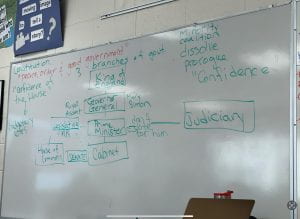


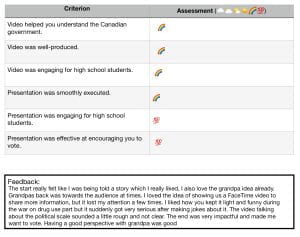
 Where I pushed my thinking: In the creation of the final presentation about “why young people should vote,” I pushed myself to find ways to make the presentation engaging, and also to problem solve when we ran into issues. Our judge’s panel was made up of Grade 10 and 12 students, which meant that everything in our presentation needed to capture their
  attention. My group decided that Noah should be an old man with outdated views and who kept interrupting us. This was funny and broke up the longer sections. We also made it seem like we were “FaceTiming” a person who then talked about one of the issues and we set our whole video up as a ted talk. I personally had the idea to split up the long government video into two parts so that the judges did not get bored. Overall, I pushed myself to be very aware of who my audience was and how to get them to care about the information we wanted to get across. You can read their feedback below:

 Now that we were in the debating mindset, we needed to practice using persuasive writing. “The Best _____ Ever” was our prompt and I chose to do the best sport (which you all should know is volleyball!!!!!!!).
 Once we chose our topic we begun researching which allowed me to show growth in my questioning competency. I chose the affirmative side of the statement and because we weren’t supposed to know our opponent’s arguments, the affirmative and negative were put on different sides of the classroom. One engaging part of this project was how my opponent/nemesis/Ava and I made the competition entertaining. For example, you can see from the title of this blog that we would find creative, and fun names for our documents. Other examples are the title of my
  Eventually with lots of feedback and edits I had a draft that I was excited to present.
 This was it where all my hard work hopefully was going to come together. I watched multiple people debate (which I found helpful for my own) and saw part of the other PLP students’ work (though not as much as I would’ve liked). Then it was my turn; Ava and I both did really well. A few things I am especially proud: I didn’t speak too quickly which is a tendency of mine when I speak publicly, I used my research to make up an appropriate rebuttal in the moment, and I completely redid my conclusion while talking. What I found surprising was how Ava took a shot at my argument in the conclusion (it was a smart move to be honest) but I definitely wasn’t expecting that. She also made a lot of points that I wasn’t expecting making it challenging for me to rebut her.