
Introduction
This past winter exhibition we combined and connected the two ideas of avatar and world war 2.
When I first learned we were going to be doing these topics I was confused. How does avatar relate to World War Two and how do they have anything in common? Well, I discovered they actually do have a lot in common, and the concepts that we dove into connect and relate to each other in the similar ways – powerful, meaningful and deep.
Looking Back
Before writing a reflection blog post about a project, I always take a minute to look back at my learning intention post. Rereading this post, makes me not just reflect back on what goals I set out, but also looking at the learning behaviour I chose to zoom in on. In this case, I focused on Communication and Collaboration, because it one of my biggest strengths, but also one of my biggest weaknesses.
In my VMV that I wrote for my PrePol at the beginning of the year, I talked about how my communication and collaboration could improve a lot by really breaking down group work into steps. For example, we set a due date for ourselves for step one of the project, and then once that has passed we move onto step two. This could be incredibly useful, especially because it makes sure our work is done on time, and to make sure its good quality.
Previous Learning
Before the winter exhibition, we had learned about world war 2 for around a month and a half. We went through specifics about people, places, and important events throughout the war. We were taught about the sad, hard parts to hear like the holocaust and concentration camps, and also about specific wins to Canada and the allies such as Vimy Ridge. Learning about war is not only about the battles and wins. It’s about the individuals who gave up their lives to help the allied Nations to freedom, and to defeat the Germans.
We watched a few movies in this project, but one of the ones that showed me the most reality from the German perspective was Jojo Rabbit. Jojo Rabbit is about a small boy who believed Hitler was his imaginary friend. He was enlisted in the Hitler youth and he was very Nazi forward and Nazi focused. When he had to stay home after getting injured in a training exercise, he discovered his Mom was hiding a Jewish girl in his sister’s old room. Throughout the movie he realizes that the Nazis are wrong and he starts to take the side of the Jewish girl, Elsa.
Click here to check out my Jojo Rabbit notes
Another movie we watched was Dunkirk. Read on to learn more about Dunkirk and the reflection I wrote on it:
Dunkirk was a big historical moment for many of the allied countries because in May-June 1940, about 338,000 allied soldiers were rescued from the beaches and harbour of Dunkirk. This film brought up many emotions throughout the troops, ranging from fear, and helplessness to hope and happiness. When we watched this movie, it really brought alive the idea that war was real; its not just these big stories you hear about, its hundreds of soldiers dying everyday, being scared and afraid day and night and living on edge. These soldiers endured so many things that aren’t talked about, and these emotions and ideas were brought alive in Christopher Nolans film, Dunkirk.
This movie captures the likeness and accuracy of the mood across Dunkirk. Many soldiers were terrified, frustrated and maddened from the circumstances, and just wanted to get out of there as fast as possible.
A lot of the everyday conversations soldiers had, through the ups and downs of emotions were simplified in this movie. From what I’ve read and learned about war, the men were brave and fearless; but thats just not the case a lot of the time. They were scared; they were terrified, they were going mad because of not knowing whats to come.
Dunkirk emphasizes the mass feelings of fear, uncertainty of whats to come and absolute chaos of both the soldiers and everyday people in WWII. Throughout the films cuts to the air, beaches and seas, it shows how little choice the soliders had as well. They were thrown into battle with little to no preparation, and were fighting for their lives. As well as showing the audience the soldiers being scared, and trapped, it also showed them making brave decisions and sacrificing themselves for a better outcome in the war. All the ships’ captains that came from England were also incredibly brave to bring their boats into the midst of war and bombings and rescue the soldiers from the beaches of Dunkirk.
The story of Dunkirk is a very important story that still resonates with us today because it shows how the power of nation can come together and achieve something great. Everyday people were asked to bring their boats to Dunkirk and rescue the thousands of soldiers stranded on the beaches. Instead of backing down to the challenge they rose to it and completed the task together. The story of Dunkirk reminds us that resilience, teamwork and simply hope can pull us through hard times, especially when we come together.
Exhibition Time! Going From None to Done
As we learned what we were doing for the winter exhibition just 2 weeks before the date we had to create ideas and products in a short amount of time.
Originally in my group we had 5 people – Tyler, Liann, Sven, Oliver, and myself. At some point the teachers realized that we needed to cover two more topics and so they decided to split up some groups to make the new ones. We got a little unlucky and got two members taken, so then we were left with Tyler, liann, and myself. At first I was a little upset because we had already started working and we just lost two group members, but the three of us surged forward and accomplished things we were proud of.
Our topic for this exhibition was Culture, identity, and belonging. Our group wanted this topic really badly because we felt that it would really demonstrate the connections, growths and differences. We wanted to focus on the jewish perspective and how they were discriminated and hurt on the WW2 side, and the N’avi people on the avatar side.
Creating Our Work
For the exhibition, we were tasked to demonstrate our work by making one artifact and some other posters, or way to show our learning. We chose to make 2 artifacts to display what we learned, and 3 posters. Instead of making a lot of things to have at our station, we decided to make each artifact and poster jam packed with information, and filled with our answers to questions and further thinking we did.
Artifact 1 – German Mineral Boy
The first artifact we made we named Joe Fresh – our German mineral boy. This boy demonstrates how hitler saw his followers and those he made follow him – blond hair, blue eyes, and the same visions, beliefs and ideas. The minerals represent the main rare mineral the humans dug up on pandora when they came. Connecting these two ideas, our German Mineral Boy shows how both the nazis and humans wanted something so badly that they were willing to destroy cultures and communities in the proces
Artifact 2 – Pandoras Tree
Our display shows Pandora’s tree of souls with a Jewish family tree on it, burning down to the ground. The Jewish family tree demonstrates the deep cultural history and identity that was attacked during not only the holocaust, but also throughout the two wars. The tree of souls represents the connection and spiritual culture of the N’avi. The fire symbolizes how both the nazis and the humans destroyed culture, identity, belonging and connections in pursuit of what they want without so much as a second thought.

Poster 1 – Avatar is Offside – White Saviour Ship

Poster 2 – What Holds Communities Together

Poster 3 – Cultures Threatened

Reflection on Exhibiton Day
As it was only Liann and I on exhibition day, we knew we had a lot to do. We had to set up the room, with help of the 9’s and 12’s, practice our script, and be ready for the doors to open at 5:30. Starting right after school, it was very stressful. As a lot of people didn’t show up in tutorial, it was tough to navigate the different ideas people had. Although we had ideas of how the room should look and how people should flow through it, people had new ideas, which they believed worked better. Despite these small conflicts, we had our room ready and were prepared to present.
Liann and I were overprepared I would say; we had our script sorted, we each knew all the information that we needed, and were prepared to answer any questions thrown our way. I thought that each parent, sibling and teacher that came our way understood the ideas we were trying to convey, and the thinking we were doing and had done.
Our Driving Question
How do stories, media, and propaganda shape how we remember World War II?
Propaganda can be a positive thing, because it informs the world with current events, and important world problems. It can also be a very bad thing, because it can spread false information to the public. I believe that if Propaganda is spread properly, then it can be a very effective thing. Posters can inspire soldiers to sign up for the army, stories of brave soldiers can make more young guys want to help fight for freedom, and the more information, spread through word of mouth can inspire and support these soldiers going off to war. Now, we remember war through movies, articles and more. How we remember and learn about battles and specifics on the war depends on which side it’s based on. If the movie or film is based on a young allied soldier fighting at Vimy Ridge, we are going to remember that the allies won, and the unique strategies they used to take the Ridge. I think that if you want to believe something a certain way, you can. You can read online about certain battles from the allies side, or the Germans side.
Conclusion
From learning about World War 2 to preparing for the exhibition, I felt like I grew as a learner in a few ways. I learned that the more I took notes, the more I understood the topics we were covering. The more detail they were in abled me to go back and review them when writing an essay or reflection. I also grew in my group work – I tried, and succeeded when I took a step back and listened to not only my grade 10 group members, but also the grade 9’s and 12’s.
Overall, I felt this exhibition was extremely successful, and Tyler, Liann and I did well in displaying information in a way that people could easily understand, and learn about. Every parent, sibling and teacher was engaged, and asked questions. I was really proud of my group and how we worked together for an amazing outcome.

 important internationally. On June 6th, 1944, allied forces landed on the beaches of Normandy, France to rebel against the Nazis. Thousands of soldiers were lost that day, and their bravery and courage will never be forgotten.


 wiggle and cooperate with me. Since I had decided to weave my story through with Madeline’s, we needed to film our stuffies together and have them be in most scenes with each other. It was a complicated process to get filming done, and we needed multiple people to help with holding the stuffies on the green screen someone to film, etc.. Editing was a completely different story. I struggled a bit with iMovie working, because my images were zoomed in too far, and I had to figure out how to zoom out and have the image the correct size. My green screen on top of the image, then was floating, so those images needed to be zoomed in, but not to much or else it would be blurry. Lots and lots of tweaking and changing my movie later, I started to drift closer to my final draft. We all handed in 3 different drafts. Draft one was just to show we had something done.

 book, with differentiated opinions, but the ideas and plot of the book hit hard. This book was hard to follow, but when I spent time really trying my best to understand


 I’ve done DI before, where we got first place, but this was nothing like doing it before. When I got my group, I was thinking ok, we can do this, but oh boy was I ever wrong. We did our plans, and got our story sorted out, but we still had a script to write, costumes to make and find, and props to build. We dedicated 2 pro D days to making our props which turned out really well! The only problem was the DI competition was a week away, and we needed to practice and figure out the other small details. We ended up spending long days at school, and the weekend memorizing lines. I think the competition went relatively well, although if we had more time I think our story could’ve evolved and been a little better. Over the
  course of finishing our performance I got frustrated a couple times. Yes, sometimes I like things to be done my way, but that isn’t always the answer. I think that when I get frustrated I tell myself things that need to get done, rather than making and doing unnecessary things that aren’t very helpful to my group. I need to focus on bouncing back and spreading out the work so that everyone can be successful in my group. For me, showing resilience is being flexible with my peers, listening to their ideas and communicating my thoughts openly. In the end, DI went ok. If my group used our time better and bounced ideas off each other earlier I believe we could have done better. You can read about my first DI experience
  participating. At the beginning of the year, I felt like I knew what to say and that it was at least somewhat right, but I didn’t want to mess up or say the wrong thing, so I didn’t say anything at all. This was a huge mistake because as I spoke up more, and became more confident with my ideas and thoughts, I got more things correct, or it was a good idea. Now when a question is asked, most of the time, I can shoot my hand up and present my idea, and be confident in myself. Of course, my thoughts aren’t always right, and I have gotten better at accepting that. Sometimes I’m thinking along the right lines, but it just doesn’t quite fit, or sometimes I am 100% on the wrong track, and need to rethink everything. Being wrong and correcting your answer to make it right shows learning because you can show what you learned by explaining why your answer is wrong. I can show my engagement through my blog posts and even in my mPOLS and tPOLS! Here are some examples of my blog posts:
 demonstrated this best at the End Of The World project, where my group was sometimes off task, and needed some reminders to hop back on and stay as engaged as possible.
 Where as this year we get to balance doing fun experiments with learning cool information to then using that information and making our projects with it. The project we just finished doing was called Small But Mighty, and in this project we were taught all about cells in our bodies which we demonstrated through our immune system character cards. I was really proud of how I took the feedback I got on my field journal and made it better. I struggled the most with making my observations precise and accurate.
 thoroughly enjoyed, and some I disliked. In life, you can’t choose it all, so I dealt with it! We have done so many projects this year from writing songs to presenting to grade 11s! The most recent project we did, the Spring Exhibition, was the one I chose, because I think it shows my success behaviours I chose the most. The project on the spring exhibition all started with our field study along the Oregon Coast. As we went, little by little we added to our ‘adventure book’ which was a document of the activities and things we did. Other than the book, our project was all about advertising. We were split up into groups for the Spring Exhibition and my group got the theme Discovery and Learning. We were to represent the theme of our group in our advertisements about the Oregon Coast. I love that everyone in my group collaborated and contributed to our dazzling final result. I think our presentation at the exhibition turned out great and it is definitely something to be proud of.
 consideration. ‘How does this affect your worldview?’ ‘How does this project influence your worldview?’ These were questions we were peppered with and they will always and forever stick with me. It helps me put myself into other people’s shoes. The Oregon trip influenced my worldview because all the little stops and stores and jobs people do can change a persons mind.
 Craft. This wondrous creation has helped me so much, and I wish that I had started to use it earlier. Craft has taught me to be organized, even if I want it to still be aesthetic.
 Click on the links to visit their blog to see their answer to the driving question and how they thought the project went!
 our very first project of the year, and most projects since have been connected to worldview.
 They originally occupied western Quebec and Ontario. They lived in Wigwams, which were kind of like Teepees, although Wigwams were much more stationary, while Teepees could be transported with visitors. The Algonquin people shared their knowledge through storytelling, and they believed in a supernatural being.
 After my group and I presented our Keynote to the grade
  11’s, our teacher told us we then had to make an individual keynote. I think this assignment was a way of finding out if we knew the information through and through without cue cards or anything. We could only use presenters notes, and we needed to make a 2 slide keynote with 3 words per slide, although we could add as many pictures as we wanted. My individual keynote presentation was my final answer to the driving question.
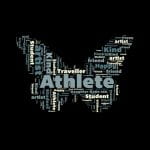 details on other apps. I think my favourite app that we learned about would be WordPack. You put text into a box, and then you can choose your shape and colour. The app configures the words to go with the shape and colour which ends up looking really cool. This is mine that I made. We all thought of words to describe ourselves, and then made our own personal WordPack.
 got to display
 use microscopes and the different parts of them. We all got to make our own sliders, which fit under the microscope so we can look at them. I used dirty water, and found little critters in the murky water.
 that really stood out to me, was the winter exhibition and the lead up to it.
  Previously to the winter exhibition we learned about the Renaissance and medieval periods in time. Our assignment was to create a triptych representing three time periods; the Renaissance, medieval, and present day. We were to then put these into a tableau, which we would present at the winter exhibition. We were put into groups for this, and I felt as though Ella and I were great leaders in the group. We made sure our group members were on task, everyone was contributing a bit, and practicing! Our props was my favourite part about our entire presentation because we spent hours making them, and to see everyone saying they liked them was quite rewarding.
